The following is taken from the text Aham Sphurana, from the date 20th July 1936. See here to find out more about this text and also to download it for free:
Questioner: It is said that the legendary Sanjeevani herb is found somewhere in this Arunachala hill, by consuming which one attains to state of Immortality. Will Bhagavan please let me know where it is in the hill?
Bhagavan Sri Ramana Maharshi: The hill itself bestows immortality.
Q.: How?
B.: Constant rememberance of Arunachala’s formsteadily but surely introverts the mind. Then the mind accquires the strength to plunge inward, or rather loses the strength to move outwards, towards thoughts, intellectual concepts or physical objects. Eventually it becomes still entirely; then the Arunachala within pulls it into itself and destroys it once and for all. This is the Sanjeevani shakti [Tom: shakti means ‘power’] of Arunachala about which you are asking.
[Tom’s comments: here we have Bhagavan explaining how remembrance of Arunachala introverts the mind, pulling it inwards away from both gross and subtle objects, until it becomes entirely still. Arunachala then does the final step of destroying the mind, the result of which is explored below]
Q.: Is it not a herb?
B.: I have said what I know.
Q.: Is the ultimate aim of spiritual practice, only destruction of mind?
B.: Yes.
Q.: One whose mind is dead would perhaps have life in the body, but he would be in a state of comatose senselessness, like a stony, frigid vegetable, unable to understand anything. Is that the perverse fate toward which all spiritual aspirants are gravitating?
B.: Absence of mind is pure Bliss. It is possible to function in the world normally, without mind.
Q.: Oh! How so?
B.: Some power takes over his body and animates it without his knowledge.
Q.: Is it God?
B.: Give it any name you like- God, Providence, Fate, Karma, etc.; the nomenclature matters not.
[Tom’s comments: Bhagavan first confirms that manonasa, or destruction of mind, is indeed the ultimate aim of spiritual practice, thus equating manonasa with both self-knowledge or liberation. Then he goes onto explain that the body can continue to function without the mind under another higher power. This is done without the Jnani’s knowledge or awareness. Of course, Bhagavan is describing this form the relative standpoint, or the standpoint of ignorance/maya. Below we will see a higher teaching given later]
Q.: Are names unimportant in the scheme of things, then? How to call someone if he has no name?
B.: The fact is that in order to escape its own destruction the mind creates a world of name and form over the pure vastu [Tom: vastu means reality] that is the Atman. It abhors chaos and randomness and prefers order and systematisation. It creates cause-consequence relationships and gives itself to understand ideas about its environment, which is actually merely its own projection. It tries to study the nature of its body’s physical surroundings and formulates laws by means of which it then expects those surroundings to function; deviations from existing laws give rise to the birth of new laws! Never once does it wonder, ‘What is my self?’; thinking to conquer its surroundings, it foolishly occupies itself with sensory perceptions, thoughts, and intellectual hypotheses. Thus it is born again and again and needlessly undergoes all sorts of tribulations. Then it asks, ‘Alas! Why has God done this to me?’. Who is to blame for our mistake, if not ourselves?
[Tom’s comments: here Bhagavan explains that the mind creates the universe of name and form and superimposes this onto the formless objectless reality that is Atman, one’s true self. It then projects cause and effect, or karma, and starts to study the environment around it, which is actually nothing but its own projection, never asking or enquiring ‘who am I?’. Below Bhagavan will again confirm, as he has done many times in his own writings, the nature of Jnana:]
Q.: The state without mind is called Jnana?
B.: Yes.
Q.: Then what or who is a Jnani?
B.: One who has mastered the art of not knowing anything and not doing anything.
Q.: I am unable to divine the explication underlying Bhagavan’s sibylline [Tom: mysterious] words.
B.: The Jnani’s senses are unhinged from the world about him. He is sunk in the Self and quite irrevocably lost there.
[Tom’s comments: Bhagavan is explaining that the Jnani does not truly perceive the world, something he only intimated above, and he will expand on this below]
Q.: How is he different from the man on the Clapham omnibus (சாதாரண மனிதன) [Tom: the Tamil phrase given here means ‘the common man/person’ which the translator has translated as ‘the man on the Clapham omnibus’ a phrase popular in the 1930s which also means ‘the common everyday person’; this latter phrase was very common amongst lawyers, and the person who was said to have recorded these dialogues, Sri Gajapathi Aiyyer, was also said to have been a lawyer]
B.: The standard of reality employed by the man on the Clapham omnibus is the jagrat [Tom: waking] state in the jagrat state, and so on. For the Jnani the standard of reality is Reality itself.
Q.: What is this Reality?
B.: Man’s true Self.
Q.: How am I to realise this true Self?
B.: Whose Self is it?
Q.: Mine… but really who am I?
B.: Yes. All other questions lead up only to this supreme question.
[Tom’s comments: all paths eventually lead to self-enquiry]
Q.: What is the answer to the question?
B.: The discovery that the personal self, including the one making the discovery, never existed.
Q.: What remains thereafterward?
B.: Only the Truth; it is the state where the world of word, name and form perishes and silence alone prevails.
[Tom: here Bhagavan has clearly stated that for the jnani there is no world or name and form, only the Self or Silence remaining. Now Bhagavan will explain the method of Self-Enquiry:]
Q.: How to communicate thoughts to others without the assistance of words?
B.: That is only necessary so long as duality still persists in the mind.
Q.: How to get abiding shanti [Tom: peace]?
B.: Shanti is the natural state. The mind obstructs one’s inherent peace. Atma-vichara is only in the mind; it does not affect the Self. Investigate the mind; it will disappear. There is no entity by name mind. Because of emergence of thoughts, we surmise the existence of something from which they must originate; this we term mind. When we probe inwards to see what it is, there is nothing to be found except the real Self. After the false mind has vanished, Peace will be found to be Eternal.
Q.: Then what is buddhi?
B.: The thinking or discriminating faculty. These are only names. Call it the ego, the mind or the intellect; it is all the same. Whose mind? Whose intellect? The ego’s. Is the ego real? No. We confound ourselves with the ego and call it intellect or mind. This is because of the evil influence of avidyamaya [Tom: avidya means ignorance, maya means the power which projects the illusion of the body, mind and world. Here Sri Ramana is equating or compositing the two], which has superimposed this ephemeral, illusory, and worthless world of name and form over the ever-existing substratum, which is verily pure Reality and the supreme Peace itself. How to escape from the illusion? By searching for the mind and finding it, including that very finder, to be non-existent, to have been always non-existent, and in fact impossible of existence.
Q.: Emerson says, “Soul answers soul by itself – not by description or words.”
B.: Quite so. However much you learn, there can never be an end to objective knowledge. You ignore the doubter but try to solve the doubts. On the other hand, search for the doubter, and the doubter and his doubts will both disappear.
Q.: Therefore, the question resolves itself into one of knowing the Self.
B.: Quite so.
Q.: How to know the Self?
B.: Enquire into what the self is. What you are now imagining to be your Self, is really either the mind, the intellect or the ‘I-thought’. [Tom: Bhagavan has already said above that these three are the one same thing] Other thoughts are able to arise only after the ‘I-thought’ rises. So, hold on to the I-thought without pause. Soon, you will find that all thoughts vanish leaving the Self alone as the residue.
Q.: The difficulty lies in reaching the Self.
B.: There is no reaching it at all because it is eternal, here and now. If the Self were to be gained anew, it would not be permanent. What is impermanent is not worth striving for.
Q.: How to obtain equilibrium of mind? What is the best way?
[Tom’s comments: We will see Bhagavan subtly rebuking the questioner here – Bhagavan has advised self-enquiry in which the mind is no more, and instead the questioner is asking ‘how to obtain equilibrium of the mind?’]
B.: Just now you were asked to investigate the mind. It is eliminated and the Real you remain over. Let your standpoint become that of Jnana and then the world will be found to be not apart from the Self. Drishtin jnanamayim kritva pashyaet Brahmamayam jagat [Tom: ‘Having made your outlook one of Jnana, one will see the world full of Brahman’ ~Tejobindu Upanishad 1.29; this was a phrase often repeated by Sri Ramana, eg. also see Talks with Sri Ramana Maharshi, Talk 238, which is likely a record of the same conversation given here]. So, the question is one of outlook. The Atman pervades all. You have now lost hold of your Self and go on doubting about other things. Find your Real Self and all your problems and doubts will disappear.
Q.: But how to find this Real Self?
B.: Are there two ‘I’s in the same One? How do you know your own existence now? Do you see yourself with these eyes? Investigate into yourself. How does this question arise? Do I remain to ask it or not? Can I find my Self as in a mirror? Because your outlook has, owing to the poisonous delusion of ignorance, become outward-bent, it has lost sight of the actual Self and your vision is external. The Self is not to be found in external objects. Turn your gaze within and plunge within; you will be the Self.
Q.: It is said that the unknowable can be attained only by the grace of the unknowable.
B.: Yes. He helps you to Realise, if only you would forsake the external world of word, name and form. Such is His merciful Grace.
Q.: How to kill the mind, since the death of the mind is said to bring about Realisation easily?
B.: Will a thief betray himself? Will the mind find itself? The mind cannot kill the mind. You abandon what is real and are holding on to the mind which is unreal and also trying to find what this unreal mind is. Was there any mind in your sleep? No. It is now here. It is therefore impermanent. Can the mind be found by you? You are not the mind. You think you are the mind and therefore ask me how it is to be checked. If it is there it can be checked. But it does not exist at all. Understand this truth by search. Search for unreality is fruitless. Therefore seek the reality, i.e., the Self. That is the way to ruin the mind. There is only one thing Real, and that is Reality, which is the same as man’s true Self.
Q.: What is the nature of the true Self of man? Is it always happy?
B.: It alone is what IS: the ‘other elements’ are only appearances. Diversity is not the nature of the Real. We read the printed characters on the newspaper but ignore the paper which is the background. Similarly you are obsessed with the modifications of the mind and ignore the ever-present background of pure consciousness. Whose fault is it?
Q.: Is there a limit to the Real Self?
B.: What is the Real Self?
Q.: The Individual soul is the only self I know. According to Bhagavan it is unreal.
B.: What is the individual soul? What is the cosmic soul? Is there any difference between the two or are they identical? Any appearances are bound to disappear. Anything created will certainly be destroyed. The eternal is not born – consequently, nor can it die. We are now confounding appearances on Reality with Reality itself. Any appearance carries its own end in itself. Can there be anything that appears newly? If you cannot find the Self through the Jnana-vichara method, surrender to the substratum of appearances unreservedly; then, actual Reality will be left over as the residue.
Q.: What happens to a man after death?
B.: Engage yourself in the living present. The future will take care of itself. There is no need to worry about the future. The state before creation, the process of creation, etc., etc. are all dealt with in the scriptures in order that you may finally endeavour to know the present. Because you say you are born, therefore they say, yes, and add that God created you. But do you see God or anything else in your sleep? If God be real why does He not shine forth in your sleep also? You are always – now the same as you were in sleep.
You are not different from the one in sleep. Thus, why should there be any difference in the feelings or experiences governing the two states? Did you ask, while asleep, the question regarding your birth? Did you ask then, where do I go after death? Why think of all this now in the wakeful state? Let what is born think of its birth, the remedy, the cause and the ultimate results. What is birth? Is it of the ‘I-thought’ or of the body? Is ‘I’ separate from the body or identical with it? How did this ‘I-thought’ arise? Is the ‘I-thought’ your nature? If not, what is your Real nature?
Q.: To whom to ask these questions?
B.: Exactly – that is it. There is no end to it all.
Q.: Are we then to merely keep quiet?
B.: Doubts cease when your apparent ignorance is transcended.
Q.: How did this ignorance originally arise?
B.: Is ignorance asking you, ‘Why have I arisen?’. It is you who are asking the question. So, find out who you are. Then other things will take care of themselves.
Q.: The vichara again! Why should I engage in this Atma-vichara?
B.: Because if Atma-vichara is not pursued, loka-vichara creeps in [Tom: Loka means world, vichara means enquiry, Atma means self]. Engage in Self-investigation; thereby the non-self disappears. The true Self is left over. This is self-investigation of the Self. The one word ‘தான்’ [Tom: ‘Thaan’ or ‘Self’ or ‘oneself’] is equivalent to the mind, body, man, individual, the Supreme and all else.
This article is an excerpt from a much longer article which you can view here, that gives further quotes on this same topic from others including Sri Ramana Maharshi, Sri Shankara, Suresvara and Ribhu Gita. The original article also gives disclaimer which you should read (ie. these teachings are for earnest seekers only and can have detrimental effects for those not ready for them) and makes some suggestions as how to best appraoch these teachings.
The following verses are taken from the text Voga Vasistha Sara, which you can view and download here in its entirely. As with most Advaita texts, various teachings from different levels are given in this text. In Yoga Vasistha mainly Ajata Vada and Dristi Sristi Vada teachings are given, and below I will list some of the quotes pointing to Ajata Vada:
1.17 Even the slightest thought immerses a man in sorrow; when devoid of all thoughts he enjoys imperishable bliss.
1.23 Nothing whatever is born or dies anywhere at any time. It is Brahman alone appearing illusorily in the form of the world.
2.1 Just as the great ocean of milk became still when the Mandara Mountain (with which it was churned by the Devas and the Asuras) became still, even so the illusion of samsara comes to an end when the mind is stilled.
2.2 Samsara rises when the mind becomes active and ceases when it is still. Still the mind, therefore, by controlling the breath and the latent desires (vasanas).
2.3 This worthless (lit. burnt out) samsara is born of one’s imagination and vanishes in the absence of imagination. It is certain that it is absolutely unsubstantial.
2.5 This long-living ghost of a samsara which is the creation of the deluded mind of man [ie. ignorance] and the cause of his sufferings disappears when one ponders over it.
2.8 Whatever is seen does not truly exist. It is like the mythical city of Gandharvas (fata morgana) or a mirage.
2.11 This creation, which is a mere play of consciousness, rises up, like the delusion of a snake in a rope (when there is ignorance) and comes to an end when there is right knowledge.
2.19 The bliss of a man of discrimination, who has rejected samsara and discarded all mental concepts, constantly increases.
3.22 If, by perceiving that the objects of perception do not really exist, the mind is completely freed (from those objects) there ensues the supreme bliss of liberation.
3.23 Abandonment of all latent tendencies is said to be the best (i.e. real) liberation by the wise; that is also the faultless method (of attaining liberation).
3.24 Liberation is not on the other side of the sky, nor is it in the nether world, nor on the earth; the extinction of the mind resulting from the eradication of all desires is regarded as liberation.
3.25 O Rama, there is no intellect, no nescience, no mind and no individual soul (jiva). They are all imagined in Brahman.
3.26 To one who is established in what is infinite, pure consciousness, bliss and unqualified non-duality, where is the question of bondage or liberation, seeing that there is no second entity?
4.1 Consciousness which is undivided imagines to itself desirable objects and runs after them. It is then known as the mind.
4.9 The mind is the cause of (i.e. produces) the objects of perception. The three worlds depend upon it. When it is dissolved the world is also dissolved. It is to be cured (i.e. purified) with effort.
4.12 O Rama, he who, with in-turned mind, offers all the three worlds, like dried-grass, as an oblation in the fire of knowledge, becomes free from the illusions of the mind.
4.13 When one knows the real truth about acceptance and rejection and does not think of anything but abides in himself, abandoning everything, (his) mind does not come into existence.
4.14 The mind is terrible (ghoram) in the waking state, gentle (santam) in the dream state, dull (mudham) in deep sleep and dead when not in any of these three states [ie. when in the fourth state, Turiya, self-realisation].
4.16 The mind is samsara; the mind is also said to be bondage;
6.2 The mind, the intellect, the senses, etc. are all the play of Consciousness. They are unreal and seem to exist only due to lack of insight [ie. objects only appear due to lack or self-knowledge, which is also known as ignorance].
6.9 The world which has come into existence on account of my ignorance has dissolved likewise in me.
7.16 It is again strange that while the Supreme Brahman is forgotten by men, the idea ‘this is mine’ called avidya is firmly held by them (lit. strongly confronts them).
10.1 Supreme Bliss cannot be experienced through contact of the senses with their objects. The supreme state is that in which the mind is annihilated through one-pointed enquiry.
10.2 The bliss arising from the contact of the senses with their objects is inferior. Contact with the sense objects is bondage; freedom from it is liberation.
10.5 The belief in a knower and the known is called bondage. The knower is bound by the known; he is liberated when there is nothing to know.
10. 6 Abandoning the ideas of seer, seen and sight along with latent desires (vasanas) of the past, we meditate on that Self which is the primal light that is the basis of sight.
10.11 The rock-like state in which all thoughts are still and which is different from the waking and dream states, is one’s supreme state.
10.16 There is only the one waveless and profound ocean of pure nectar, sweet through and through (i.e. blissful) everywhere
Hi Tom, thank you again for this deep and complete teaching. Why are we turned outwards? Because the mind cannot grasp, cannot understand the Self or Self-inquiry. It only understands objects. It can only crave what it knows. We are used to navigating through life using the mind as our navigator, but this does not work when seeking the Self.
Welcome to Satsang with Tom Das – a space for nonduality, Advaita, and living self-realization through the grace of Bhagavan Sri Ramana Maharshi. In this Satsang, Tom shares directly from lived knowing, pointing to the timeless truth Tat Tvam Asi – You Are That and the one Self that we all are. If your heart longs for freedom, this meeting invites you to dissolve into Ramana’s grace, to surrender at his feet and discover what you are beyond mind, story, and struggle. Everything we see, touch, think, and feel is welcomed into the heart of Love so that all illusion can dissolve and only Ramana remains.
Tom speaks honestly about once thinking he was “too clever” for love and devotion, and how the deep desperation for liberation becomes Bhakti: heartfelt prayer, pleading, and surrender to what is truly Real. This path is about what the heart most deeply wants – genuine liberation, peace, and the end of the sense of separation.
✨ In this Satsang with Tom Das, you will explore: -Direct recognition that there is only one Self: what I am and what you are -How Ramana’s grace dissolves the separate “me” in the light of devotion -The movement from intellectual understanding to living Bhakti and surrender -Perceiving everything in the heart of Love so it can fully dissolve
🙏 For seekers of: nonduality, Advaita Vedanta, Ramana Maharshi, self-inquiry, Bhakti, devotion, and living Satsang in daily life.
📌 If this Satsang touches you, please like, comment, and subscribe to Satsang with Tom Das so more seekers can discover these teachings.
This video was recorded live during a Satsang meeting with Tom Das and put together by volunteers.
“The scriptures talk about prarabdha karma only for the purpose of easy understanding of the ignorant“. ~Sri Shankara, Aparokshanubhuti verse 97
“The statement that the jnani retains prarabdha while free from sanchita and agami is only a formal answer to the questions of the ignorant. Of several wives none escapes widowhood when the husband dies; even so, when the doer goes, all three karmas vanish.“ ~ Supplement to the 40 verses on reality, written by Sri Ramana Maharshi
462-3:… it is to convince those fools who entertain a doubt like this, that the Shrutis, from a relative standpoint, hypothesise Prarabdha karma [as existingfor the Jnani] ~Sri Shankara, Vivekachudamani
Traditionally it is said that when one attains liberation, all of that person’s karma is wiped out and so they will not be born again into a future rebirth, thus ending the cycle of samsara (the cycle of birth, experience, suffering, death and rebirth). Here the word karma, which literally means action or doing, refers to the momentum of cause and effect that causes things to happen in our life and in the future, including in future lives (for those who believe in reincarnation).
The question naturally arises, if there is no karma for the jnani (knower of truth or self, ie. one who has realised the Self and thereby attained liberation), how does their body continue to function? And surely there is some karma for the Jnani, for we see some Jnanis experience both good and bad fortunes. Why is this?
For a lower grade of seeker, the explanation is given that while all karmas* are destroyed for the jnani, prarabdha karma* remains. This prarabdha karma is the portion of karma needed to live out the current body’s life, and accounts for the good and bad things that the jnani experiences after self-realisation.
(*In Vedic traditions there are three karmas for the body: Sanchitakarma (the total storehouse of past actions; sanchita means ‘heaped together’ or ‘collected together’), Prarabdhakarma (the specific portion of Sanchita karma currently being experienced by this body in this life; prarabdha means ‘that which has begun’ or ‘that which has already commenced’, more commonly translated as ‘destiny’), and Agami karma (new actions being currently created now that shape your future; agami means ‘that which is coming’ or ‘that which is approaching’ or ‘future’)
The lower grade seeker is naturally satisfied with this answer and (perhaps because they are a lower grade seeker, or perhaps because they have faith in the teacher or teaching), they ask no further questions. They do not ask, how does this come about? How does some principle know to end sanchita and agami karma but continue prarabdha karma? And what is the mechanism by which this occurs? What principle governs this occurrence? Why does this prarabdha continue at all? Isn’t this dualistic, that some karmas are destroyed whilst others are not? And so on. The lower grade seeker simply accepts the teachings, as it gives their mind an explanation which makes sense to them, and the simple mind is often satisfied by mere explanations.
However, to earnest seekers who truly thirst for liberation, the great sages such as Sri Ramana Maharshi and Sri Shankara have said that this is just an explanation for the ignorant who consider the Jnani to be a body-mind entity, and that in truth, there is also no Prarabdha for the Jnani, for the Jnani has no body and sees no body.
We will look at some quotes from both Sri Ramana Maharshi and Sri Shankara that explain this, and also some commentary from Swami Chinmayananda that states the same, as well as teachings from Sri Nisargadatta Maharaj on this topic too.
We will see that the teaching there is no prarabdha karma for the Jnani and that there is no world for the jnani is in fact the traditional teaching of Advaita Vedanta that has been taught for centuries as per Shankara’s writings, and as per the writings of various others down the ages, and that it is only relatively recently, perhaps in the last 40-50 years or so, that a newer intellectualised form of Vedanta (that claims to be Traditional Advaita) has become more popular – Neo-Advaita it could be called.
Questioner: I have a question, if Ajnanam (ignorance) is removed* that means the whole source of Samsara is removed. In such a case why should the Jnani (realised sage) even have Prarabdha Karma*. That also should not be present right?
Tom: In Truth, there is not even any such thing as a Jnani (meaning a person or body-mind that is ‘realised’) – there is only That Objectless Subject-Self-Brahman. So there is no karma whatsoever for ‘a Jnani’ (a Jnani here meaning the Self). The self has no duality, and no karma. Karma is born of ignorance and is maya, unreal. They are one and the same – karma and ignorance – or one comes from the other. This is also what is taught in the Upanishads (eg. Adhyatma Upanishad) and by Shankara, both in his commentaries and in texts such as Vivekachudamani.
*Removal of ignorance is the same as Self-Realisation, so say the Upanishads, so says Shankara.
**Prarabdha Karma is the portion of karma that, according to the Vedas, gives rise to the body in the present birth and will play out and determine the specifics of the present life. A simple translation could be ‘destiny’ or ‘what is destined for this life’. The idea of this question is that, for example, if you have ‘been bad’ in the past and have accumulated negative karma as a result, even though you have realised the Self, this negative karma may continue and cause suffering for you even after Self-Realisation. The Upanishads are clear that all karmas and all suffering end upon Self-Realisation, so one need not even fear the negative results of one’s past actions if one realises the Self.
We can see that even the notion of a body-mind entity, such as a ‘great sage’, is itself a fiction, for there is only the bodiless self, in which no body, mind or world ever appeared or ever could appear. All appearances are only due to ignorance, also known as ego or mind. In self-realisation, ignorance was seen to never have actually ever occurred, and the subsequent projection of the body mind and world was similarly never seen to have occurred. This is the doctrine of ajata vada, or the doctrine of no-creation, meaning nothing ever happened, or appeared to happen.
For the mind, this teaching makes no sense, for there is no worldly analogy that can explain non-duality or the Self, but this is what the higher teachings in the scriptures try to convey.
Sri Ramana Maharshi
Sri Ramana himself writes, in the supplement to 40 verses on reality the following:
The statement that the jnani retains prarabdha while free from sanchita and agami is only a formal answer to the questions of the ignorant. Of several wives none escapes widowhood when the husband dies; even so, when the doer goes, all three karmas vanish.
~ Supplement to the 40 verses on reality, written by Sri Ramana Maharshi
We can clearly see that Sri Ramana is stating that all three karmas go for the jnani, and that the idea that prarabdha continues is a ‘formal answer to questions of the ignorant’, meaning it is a lower teaching for the masses who are either not genuinely seeking liberation, or in whom an intense conscious desire for liberation has not yet arisen.
But doesn’t the jnani see the world, but see it as illusion?
However some argue that the jnani still perceives the body, mind and world, but the prarabdha karma does not affect them, and this is what is meant by ‘there is no prarabdha for the sage’. Or they say that the body mind and world, together with its prarabdha, continue, but the Jnani sees them as being illusory. Sri Ramana writes the following to discount this view. Later we will also see that Sri Shankara makes the same point:
The Self-Realised Sage knows not whether the transient body comes and stays, or dies and leaves, even as a senseless drunkard knows not what happens to his clothes.
~ Guru Vachaka Kovai, Sri Bhagavan 24 (a verse written by Sri Ramana Maharshi)
We can see here that Sri Ramana is refuting the idea that the jnani even knows what is happening to the body.
Are we not just confusing levels here?
Some further argue that whilst on the absolute level (paramarthika or the level of the highest truth) the body mind and world do not exist, but relatively speaking (vyavaharika, or on the transactional relative level) they, together with prarabdha karma, continue.
This would mean there are 2 levels of the self and that the Self is non-dualistic. Sri Ramana clears up all of these in his teachings however, stating that for the jnani, there is only the one level – the truth ie. paramarthika – vyvaharika only being apparently existent for the ajnani.
The following verses are from Sri Ramana’s teachings in the text Guru Vachaka Kovai:
21. There is no mind, nor body, nor world, nor any one called a soul; the One pure Reality alone exists, without a second, unborn and unchanging, abiding in utter Peace.
313. As one that is profoundly alseep in a carriage in unaware of the varying states of the carriage – (its running, stoppages and unyoking of horses [Tom: – ie. the 3 states of waking, dream and deep sleep]) – so the one in the Transcendental State is unaware of the varying states of the body.
We see the same teachings of Sri Ramana recorded in the text Paravidyopanishad:
39. Unless and until the mind becomes utterly extinct, these three states will continue to prevail. When the mind becomes extinguished the supreme state is won, wherein this world once and for all ceases to appear.
The state of liberation is often called ‘sahaja samadhi’. Sahaja means natural or easy, so this refers to the effortless state of self-realisation. In Talks with Sri Ramana Maharshi, talk 82, Sri Ramana is recorded as saying the following:
Just as a passenger when asleep in a carriage is unaware of the motion, the halting or the unharnessing of the horses, so also a Jnani in sahaja samadhi is unaware of the happenings, waking, dream and deep sleep.
…In sahaja samadhi the activities, vital and mental, and the three states are destroyed, never to reappear. However, others notice the Jnani active e.g., eating, talking, moving etc. He is not himself aware of these activities, whereas others are aware of his activities. They pertain to his body and not to his Real Self, swarupa. For himself, he is like the sleeping passenger – or like a child interrupted from sound sleep and fed, being unaware of it
Sri Ramana himself also writes in ‘Who Am I?’:
Just as the knowledge of the rope, which is the base, will not be obtained unless the knowledge of the snake, the superimposition, goes, so the realization of Self, which is the base, will not be obtained unless the perception of the world which is a superimposition, ceases.
And also from Sri Ramana’s ‘Who Am I?’:
Therefore, when the world appears, Self will not appear; and when Self appears, the world will not appear
But doesn’t Sri Ramana Maharshi say that the jnani is in the state of Sahaja Samadhi, the natural state of liberation in which the sage is naturally and effortlessly unattached to the phenomenal world of objects (‘sahaja’ means ‘natural’ or ‘easy’)? Yes, he does, but this too is a lower teaching. See what he says in his higher teachings:
‘So also a Jnani in sahaja samadhi is unaware of the happenings, waking, dream and deep sleep…In sahaja samadhi the activities, vital and mental, and the three states are destroyed, never to reappear.
However, others notice the Jnani active e.g., eating, talking, moving etc. He is not himself aware of these activities, whereas others are aware of his activities. They pertain to his body and not to his Real Self, swarupa.For himself, he is like the sleeping passenger – or like a child interrupted from sound sleep and fed, being unaware of it. The child says the next day that he did not take milk at all and that he went to sleep without it. Even when reminded he cannot be convinced. So also in sahaja samadhi.’
~ Talks with Sri Ramana Maharshi, Talk 82
Nirvikalpa Samadhi
What is called Sahaja Samadhi, the natural state of the jnani, is also called Sahaja Nirvikalpa Samadhi or just Nirvikalpa Samadhi. These are synonyms for self-knowledge or self-realisation or liberation. Sri Ramana Maharshi wrote in his translation of the classical advaita text Drig Drishya Viveka:
‘being completely absorbed in the Bliss experienced by the realization of the Self is nirvikalpa samadhi‘
Sri Ramana Maharshi wrote a summary of Shankara’s teachings in an essay he wrote which you can find here, in which he wrote the following:
…the natural and changeless state of Nirvikalpa samadhi is produced by unswerving vigilant concentration on the Self, ceaseless like the unbroken flow of oil. This readily and spontaneously yields that direct, immediate, unobstructed, and Universal perception of Brahman, which is at once knowledge and experience and which transcends time and space.This perception is Self-realisation. Achieving It cuts the knot of the Heart. The false delusions of ignorance, the vicious and age-long tendencies of the mind which constitute this knot are destroyed. All doubts are dispelled and the bondage of karma is severed.
But don’t we see the Jnani/Sage eating, drinking, talking, walking, etc…?
Yes, the ignorant will see the sage as a body-mind entity (whereas the Sage is really just the objectless worldless Self, Pure consciousness), and this ‘sage’ or ‘jnani’ will continue to act in the world as before, participate in the world and ‘see’ the world, but this is the exerience of the ignorant, not the direct experience of the realised Jnani (who is not truly a body-mind entity at all, being just Pure Objectless Consciousness or Spirit, also known as Nirguna Brahman).
See here and here for more on this teaching. Also see the section from Nisargadatta Maharaj below as he explains this too.
Sri Shankara
Now let us see what Sri Shankara says about this – of course we will see that he says exactly the same. Let us first see what he says about prarabdha karma and the jnani. The following verses are taken from his text Aparokshanubhuti, which means ‘unmediated (or direct) experience’. This is an extremely popular and influential traditional Advaita Vedanta text, written by Sri Shankara, that has been used as a manual for teaching Vedanta for over 1400 years, and is a well established part of the Advaita Vedanta tradition:
90. Even when self-knowledge has arisen, prarabdha karma does not cease – so it is said in the scriptures – this [claim] is now being refuted
Shankara first acknowledges this teaching that prarabdha karma continues for the jnani is given in the scriptures. He will now, in the next few verses, refute this teaching, the implication being that it is a lower teaching for the ignorant one, something that is explicitly stated later on in verse 97.
91. Upon the arising of true self-knowledge, prarabdha karma does not exist at all, because the body and all associated things [ie. all other phenomena] do not exist, just as a dream upon waking [no longer appears or exists]
We can see that Shankara is explaining that as the body and all associated things do not exist in genuine self-realisation, how can prarabdha karma exist? Prarabdha needs a body, and if there is no body or any other phenomena, how can there be prarabdha? He then gives the similie of a dream disappearing upon waking, which means that just as a dream ends upon waking, the body-mind-world end upon waking up to Self-Realisation.
In verses 92 and 93 Shankara gives further reasons or arguments why there is no prarabdha karma for the jnani:
92. Karma performed in a previous birth is called prarabdha, but since there is no other birth for the [self-realised] person, that prarabdha does not exist at any time.
Shankara’s argument here is that prarabdha karma comes from previous births. However, for a self-realised person, there have never been any births, ie. ajata (which means no birth or no creation), so how can there be prarabdha karma at any time for a jnani? In fact, there is no time or space for the jnani at all, so how can there be any karma for karma depends on space and time?
93. Just as the dream-body is a superimposition [false projection or illusion], so indeed is this body [physical body in the waking state] too. For something that is superimposed [ie. Illusory or unreal], how can there be birth? And in the absence of birth, how can that [prarabdha karma] exist?
Shankara is here stating in verse 93 of Aparokshanubhuti that the body in the waking state is an illusory projection or superimposition (adhyasa). This implication is that the body is ultimately unreal, having never really been born, and so there can be no prarabdha karma for the unreal.
Now we should be careful here as others interpret this verse slightly differently. They say that this verse merely states that the body continues to appear like a dream for the jnani, but the jnani knows the body, which continues to appear, to be an unreal superimposition on the self. They go on to say that ‘no prarabdha karma’ simply means that the jnani is unaffected by the prarabdha karma which continues to appear but just doesn’t touch the jnani or self. This is clearly a wrong interpretation, for it discounts the previous verse which states the world disappear for the jnani ‘like a dream upon waking’, and the next few verses make it very clear what Shankara’s intended meaning is.
As always, it is important not to cherry pick selected verses but to read the verses in context to understand their true meaning. Let us see the next few verses that make the teaching and intended meaning very clear:
94. Vedanta declares ignorance to be the material cause of the phenomenal world, just as clay is [the material cause] of a pot. When that ignorance is destroyed, where can the world be?
Shankara here is definitively and clearly stating, in classical rhetorical language, that (1) ignorance is the material cause of the world and (2) therefore when ignorance goes, so does the world. In the next two verses Shankara will emphasise this very point so that the meaning cannot be misunderstood:
95. Just as one, by ignoring the rope, one sees a snake due to delusion [ignorance], so too, not knowing the truth, the deluded [ignorant] one perceives the world.
Here we have another definitive statement from Shankara that the world is seen due to delusion, which is a synonym for ignorance. Note that the rope is equated with the worldless self, and the rope is equated with the world, projected and perceived through ignorance.
Doesn’t the jnani still perceive the world, but they perceive the world as self?
Some say that this means that the ignorant one perceives the world as world, whereas the jnani perceives the world as self. However it should be clear that this is not the intended meaning of these verses. If it were, Shankara would clearly say so, but instead he makes it clear that the metaphor to be used here is that of the rope and the snake, and that just as the snake disappears on apprehension of the rope, the world disappears (or, more accurately, the world was seen to have never appeared in the first place); see here in the next verse, verse 96:
96. When the rope is correctly known as the rope, the delusion of the snake does not remain; likewise, when the substratum [ie. self] is known, the phenomenal world vanishes into nothingness
Here we have Shankara stating what he has already stated rhetorically in verse 94.
Now Shankara will explain that the teaching that prarabdha karma continues for the Jnani is merely a lower teaching for the ignorant mind to more easily understand the jnani:
97. Since the body itself belongs to the phenomenal world [which disappears upon self-knowledge], how can prarabdha persist [with self-realisation]? Sruti [the revealed scriptures, ie. Vedas and Upanishads] talks about prarabdha only for the purpose of easy understanding of the ignorant.
Shankara repeatedly states that the relative world only appears due to ignorance
All this world is unreal and proceeds from ignorance, because it is seen only by one afflicted by ignorance ~Sri Shankara, Upadesa Sahasri 17.20
Having thus effaced the triad consisting of dreamless sleep, dream and waking experience, one crosses over the great sea of ignorance. For he is then established in his own Self, void of all attributes of the empirical world, pure, enlightened, and by his very nature liberated. ~Sri Shankara, Upadesa Sahasri 17.58
Because I am without an eye, I have no sight*. As I have no ear either, how could I have hearing*? As I have no voice I can have no speech. As I have no mind, how could I have thought? There cannot be action on the part of that which does not have life force (prana). There cannot be knowership on the part of that which has no mind. Neither can there be knowledge or ignorance on the part of me who am the Light of Pure Consciousness ~Sri Shankara, Upadesa Sahasri 13.1, 13.2
*(Shankara is quoting from Brihadaranyaka Upanishad 3.8.8)
Just as a dream is [apparently] real and valid until one awakens from it, so are the experiences of the waking state, such as identity with the body and the authoritativeness of perception and the other means of knowledge, real and valid until knowledge of the Self ~Sri Shankara, Upadesa Sahasri 11.5
Of me who am ever-liberated, pure, rock-firm and changeless, not subject to modification, immortal, indestructible and so without a body, there is no hunger or thirst or grief or delusion or old age or death. For I am bodiless… ~Sri Shankara, Upadesa Sahasri 13.3-13.4
Shankara’s Vivekachudamani
We also see this same teaching in Shankara’s Vivekachudamani, another extremely important text in Traditional Advaita Vedanta. It is arguably the single most important text historically and traditionally speaking in terms of its influence on Advaita Vedanta tradition for the last 1400 years, and it has been used as a manual of Advaita by countless sages who have also commended its teachings. Sri Ramana translated the entire work (click on link to view the translation) and also wrote an introduction to it which summarises the Advaita Vedanta teachings of Shankara, which you can view here:
460. Prarabdha work can be maintained only so long as one lives identified with the body. But no one admits that the man of realisation ever identifies himself with the body. Hence Prarabdha work should be rejected in his case.
And again, Shankara in his text Vivekachudamani maintains that the notion that the notion of prarabda karma is only taught in the scriptures to ‘convince fools’ who, erroneously thinking the Jnani to be a body-mind entity, ask questions like ‘how does the body of the jnani live?’:
462-3. “If the effects of ignorance are destroyed with their root by knowledge, then how does the body live?” – it is to convince those fools who entertain a doubt like this, that the Shrutis, from a relative standpoint, hypothesise Prarabdha karma, but not for proving the reality of the body etc., of the man of realisation.
ie. Shankara is stating the notion of prarabdha karma is only to satisfy the minds of ‘fools’ and not to show that the jnani actually has a body or sees a world.
This verse is actually very telling, as Shankara’s first point is that ‘the effects of ignorance are destroyed with their root by knowledge’. The effects of ignorance refer to all arising phenomena, including the body and mind and world, also known as duality. The next logical question for a ‘fool’ is ‘how therefore does the body live if there is no perception of a body or a world?’. It is a question for a ‘fool’ as one with a sharper intellect will realise that the teaching is saying that the body and mind are mere projections of ignorance and were never real or existent in the first instance, so this is not something that needs to be worried about or explained.
The ‘fool’, however, attached to the notion that bodies and minds and the world are all real and existent, not realising the import of the teaching, asks the question ‘how does the body live?’.
Now, if Shankara meant by’ the effects of ignorance are destroyed’ that the perception of the world continues for the jnani but the jnani is no longer attached to these perceptions, then the question ‘how does the body live’ does not arise, for the body would just carry on living according to its prarabdha.
So here in this verse, if we analyse it properly, we can see, yet again, what Shankara’s intended teaching is and what it is not.
No duality in non-duality
After these above verses, the text Vivekachudamani by Sri Shankara then goes on to say that there is only the non-dual Brahman, in which there is no duality whatsoever. Repetition is used to drum this point home, ensuring the reader understands there is no change, no activity (karma), it is homogenous (with no variation), it has no parts or aspects to it, etc, etc:
464. There is only Brahman, the One without a second, infinite, without beginning or end, transcendent and changeless; there is no duality whatsoever in It.
465. There is only Brahman, the One without a second, the Essence of Existence, Knowledge and Eternal Bliss, and devoid of activity; there is no duality whatsoever in It.
466. There is only Brahman, the One without a second, which is within all, homogeneous, infinite, endless, and all-pervading; there is no duality whatsoever in It.
467. There is only Brahman, the One without a second, which is neither to be shunned nor taken up nor accepted, and which is without any support, there is no duality whatsoever in It.
468. There is only Brahman, the One without a second, beyond attributes, without parts, subtle, absolute and taintless; there is no duality whatsoever in It.
469. There is only Brahman, the One without a second, whose real nature is incomprehensible, and which is beyond the range of mind and speech; there is no duality whatsoever in It.
470. There is only Brahman, the One without a second, the Reality, the One without a second, the Reality, effulgent, self-existent, pure, intelligent, and unlike anything finite; there is no duality whatsoever in It.
The ego-mind projects the entire world
In Vivekachudamani, Shankara explains that the entire phenomenal world is a projection of the ego-mind or ignorance:
169. There is no Ignorance (Avidya) outside the mind. The mind alone is Avidya (ignorance), the cause of the bondage of transmigration. When that is destroyed, all else is destroyed, and when it is manifested, everything else is manifested.
170. In dreams, when there is no actual contact with the external world, the mind alone creates the whole universe consisting of the experiencer etc. Similarly in the waking state also; there is no difference. Therefore all this (phenomenal universe) is the projection of the mind.
180. Hence sages who have fathomed its secret have designated the mind as Avidya or ignorance, by which alone the universe is moved to and fro, like masses of clouds by the wind.
Some modern readers may think that Shankara is merely speaking of the conceptual world, our ideas or the labelling of concepts and objects, but if you read his writings it becomes clear Shankara is actually stating the the mind literally creates the world. It would take too long to go into this here, but instead you can see this this article herewhere this is explained in depth – more quotes are given and you will also see teachings from Sri Gaudapada and Sri Suresvara (Shankara’s student) and otheres on this same topic
Swami Chinmayananda
In his commentary on the verse 97 of Shankara’s Aparokshanubhuti, Swami Chinmayananada writes the following:
The BMI, PFT and the OET* together constitute the prapanca [Tom: prapanca, this is the world often used in the scriptures to denote ‘the world’], the ever changing perishable phenomenal world. So where the Reality of the Atman is apprehended, how can the body which is a part of the phenomenal world come to exist? I the dusk you mistook the rope to be the snake and the post for the ghost. When you switch on the torch and then realise the post will you still say that you are seeing the smile of the welcoming ghost in the post, even though you accept that the ghost has disappeared? With the disappearance of the ghost, everything connected with the ghost totally completely comes to an end.
Similarly, as long as I was identifying myself with my body, mind and intellect I recognised my prarabdha and submitted to it. When I realise the Truth, ignorance gets ended and with it the BMI [body-mind-intellect] cease to exist and so how can there be any prarabdha?If this be the case why did the sastra say that prarabdha exists even for a Realised Soul? It is only for the popular understanding of the ignorant who have not got the scientific understanding of Vedanta, at the earlier stage of understanding, that the sastras introduce this in this way. But when the understanding that Truth alone remains, dawns, he will himself come to understand that there can be no prarabdha, for prarabdha is only at the plane of plurality in a concept of time. When a student does not know what a chair is, the teacher draws the picture of a chair and then explains its use and nature. It is only in the initial stages that he draws the picture of the chair and then explains its use to the understanding of the lesser intellects. Later when he refers to the chair he need not draw the picture. So too to the lesser intellects when the sastras explain the nature of realisation with reference to the actions they say there is prarabdha for the Man of Realisation. But, when once the student evolves and gains subtlety of understanding, the teacher points out the Truth in which there is admixture of no otherness.
*Swami Chinmayananda often used these abbreviations: BMI = body-mind-intellect, ie. what I call the body-mind; PFT = perceiver, feeler, thinger, ie. what I call the mind or ego, or what the scriptures call the ego or subtle body; OET = objects, emotions and thoughts, ie. what broadly corresponds to the notion of the world of gross and subtle objects.
I won’t repeat here, but is clear that Swami Chinmayananda is interpreting the text in the same way as I have elucidated above, which in turn is in line with Shankara’s own writings and that of Sri Ramana’s quoted above too.
The next 2 verses of Aparokshanubhuti, verses 98 and 99, continue along the same lines, again arguing against the existence of prarabdha karma for the jnani.
We see the same teaching in Swami Chinmayananda’s commentary on Shankara’s masterpiece Vivekachudamani. Swami Chinmayananda writes in his commentary on Vivekachanudamani verse 462, writing of the Jnani:
‘… For he, in his absolute state of realisation, does not perceive or recognise the existence of the physical body…Summing up his arguments, Shankara, with biting ridicule asks, “How can there be prarabdha for the unreal, which naturally is unborn and, consequently, non-existing?”‘
Notice how Swami Chinmayananda in his above commentary equates ‘unreal’ with ‘non-existing’ and also equates these with ‘non-perception’ and being ‘unborn’. Of course, these terms are synonymous in Vedanta teachings, but later more modern commentators try to twist the words of the scriptures by stating such things as ‘In Vedanta, real means temporary and unreal means permanent’ or other false notions such as ‘Mithya doesn’t mean unreal, it means dependent reality‘. Of course, no such teaching is ever given in Vedanta scriptures or teachings, these being distortions for the mind in order for the mind to make sense of a teaching – more on this in this video and this link here: https://tomdas.com/2024/09/30/the-meaning-of-real-in-advaita-vedanta/
And in his commentary on verse 463 of Shankara’s Vivekachudamani, which we have discussed above already – first here is Swami Chinmayananda’s translation of the verse:
463. If the effects of ignorance are destroyed, root and all, by knowledge, how does the body continue to live? Sruti, from a relative standpoint hypothesises the work of prarabdha for those fools who entertain such doubts
Now let us see the commentary on this verse 463 from Swami Chinmayananda:
In this verse the Acharya tries to explain why even the Upanishads discuss this great concept of prarabdha working upon all bodies including that of the man of Perfection. This is done only from a relative stand-point, to quieten the foolish doubt of an ignorant student.The student sees the body of the Master continuously functioning in the world and naturally, therefore, he feels that the Master continues living because of his prarabdha. Little does he understand that from the lofty panoramic vision of the Master, there is no body, that he is but the pure Self…thus the Upanishads compromise and condescend to accept the concept of prarabdha for the man of realisation only to help the dull ones who are still living in the realms of plurality.
Sri Nisaragadatta Maharaj
Here are some quotes from Sri Nisargadatta Maharaj on Ajata Vada teachings taken from this post here (see this post for even more quotes like this)
The body and mind are only symptoms of ignorance, of misapprehension.
——-
He who knows the state in which there is neither the world nor the thought of it, he is the Supreme Teacher.
——-
What do you know of me, when even my talk with you is in your world only?
——-
NM: The body appears in your mind; in my mind nothing is. Q: Do you mean to say you are quite unconscious of having a body? NM: On the contrary, I am conscious of not having a body. Q: I see you smoking! NM: Exactly so. You see me smoking. Find out for yourself how did you come to see me smoking, and you will easily realize that it is your ‘I am the body’ state of mind that is responsible for this ‘I see you smoking’ idea.
——-
Nothing dies. The body is just imagined. There is no such thing.
——-
In my world nothing happens
——-
NM: My world is real, while yours is made of dreams Q: Yet we are talking. NM: The talk is in your world. In mine – there is eternal silence. My silence sings, my emptiness is full, I lack nothing. You cannot know my world until you are there.
——-
In reality, nothing ever happens.
——-
No doubt imagination is richly creative. Universe within universe are built on it. Yet they are all in space and time, past and future, which just do not exist.
——-
In pure consciousness nothing ever happens
——-
Do understand that what you think to be the world is your own mind
——-
I take my stand where no difference exists, where things are not, nor the minds that create them. There I am at home.
——-
All thinking is in duality. In identity [Tom: ie. self realisation] no thought surives
——-
Now go within, into a state in which you may compare to a state of waking sleep, in which you are aware of yourself, but not of the world. In that state you will know, without the least trace of doubt, that at the root of your being you are free and happy.
——-
To know yourself, turn your attention away from the world and turn it within.
——-
Tom:
There are many other quotes I could give, but hopefully the above gives a flavor of the higher teachings of some of the great sages of the past
Welcome to this profound moment in Satsang. In today’s gathering, Tom shares a truly radical, loving, and liberating teaching—a gift for the heart and an invitation for deep exploration. Together, we’ll gently question what is real and what is unreal, and whether true happiness can ever be found within the mind, the body, or the world around us.
This is not just a teaching to contemplate once—it’s one that keeps returning to us, patiently waiting until we’re ready to receive it and fully surrender, guiding us back to our true essence: the Self.
Our real freedom begins with trust—trust in ourselves—and a willingness to let go of taking our egos and identities so seriously. As we practice this, we discover a silence within, where desires and the restless movements of the mind are gently absorbed—and true liberation is revealed.
A sincere “control freak” opens up in Satsang about the terror of letting go, family responsibility, and the fear that surrendering to Ramana Maharshi will feel like a kind of death. Tom responds with a gentle, very personal invitation: you don’t have to force surrender or change who you are overnight—just make a little space for Bhagavan in your life, exactly as you are.
In this short, heartfelt exchange, Tom speaks to:
-The fear of losing control when you are the one holding your family together
-How “only the paranoid survive” can help in business but hinder the spiritual path
-Why you don’t need to be devotional or extreme to allow Ramana into your life
-How addictions and deep vāsanās can sometimes fall away naturally through grace
-The possibility of a personal relationship with a power greater than the ego
If you struggle with trust, surrender, anxiety, or being the one who “takes care of everything,” this teaching may speak directly to you. It points to a middle way: honoring the intelligence of healthy vigilance, without missing the bounty and treasure of grace.
🙏 If this resonates:
-Like the video to help others discover this teaching
-Share it with a friend who finds it hard to let go
-Subscribe for more Satsangs and guided pointers with Tom Das
Some people have informed me of their view that in full liberation there is no appearance of the body, mind and world, but that this full liberation, called videhamukti, only occurs when the body dies. As long as the body lives, they say, the appearance of the world continues, this being called Jivanmukti (liberation whilst alive as a person or jiva). For the Jivanmukti, the appearance of the body, mind and world continue, but they are known to be an illusion.
The Jnani, they say, will continue to experience pleasure and pain, etc, until the body dies. Some say this means that some ignorance is retained for the jivanmukti and ignorance is only completely dispelled when the body dies after jivanmukti, which again is called videhamukti (liberation without the body, ie. The state of liberation once the body has died – note if this is true, then there are 2 forms of liberation, which itself is a contradiction to non-duality – ie. there cannot be 2 different forms of non-dual liberation by definition, for that would be inherently dualistic).
This is not Shankara’s view at all. He specifically states this view is not correct in many places throughout his writing. Incidentally Sri Ramana Maharshi also explains how this view is not correct too and is in full agreement with Shankara.
In this post I will demonstrate that Shankara has the following view:
1) for the liberated sage (jnani) there is no appearance of the body, mind or world – there is no appearance of a body, there is no appearance or experience of pleasure or of pain, and there is not even any experience or appearance of time and space for the jnani
2) this liberation does not occur only once the body has died – the implication is that whilst others may perceive the jnani to have a body, to experience pleasure, pain, etc, to experience time and space, this is only the view of the ignorant onlooker. The Jnani has a different ‘experience’, namely they do not perceive samsara, the world, pleasure, pain, time, space or a body – they only ‘experience’ the ever-blissful self, which is one, homogenous and ultimately beyond all experience, all conception and all description.
3) Shankara explains that the appearance of the body (and mind and world) is an effect of ignorance, and that the cessation of ignorance cannot depend on an action such as the death of the body (yes, death of the body is an action, and Shankara famously and repeatedly taught that actions cannot lead to removal of ignorance or liberation). Conversely, if the body mind and world appear, that is an indicator that ignorance is still in effect, for these are the hallmarks of duality, samsara, jivahood and suffering.
4) Moreoever, the body, being an effect of ignorance, cannot itself remove ignorance by dying. Ignorance is the cause, the body-appearance is a consequence of ignorance. Any changes to the effect cannot effect the root cause, no, rather the root cause of duality has to be removed, and when that occurs, any effects dependent on the cause will naturally fall away.
Shankara comments on the nature of liberation
In Shankara’s commentary on the Brahma Sutra 1.1.4 Shankara makes several definitive points about the nature of liberation. In this part of the commentary, his main aim is to show that the Self is not attained through any actions or thoughts, but through Jnana or knowledge (which he explains is not a thought or understanding). However in making his arguments, he also makes some other points about the nature of liberation.
Bodilessness is liberation
First he says that there is no body in liberation, that the jnani is without a body. He uses the word अशरीरत्व (aśarīratva) which literally means ‘the state of being without a body’ (sarira = body; a- is the negating prefix, -tva denotes the state of being, similar to the English suffix ‘-ness’) or ‘bodilessness’.
Shankara writes:
Hence it is proved that asiriratva (bodilessness), which is liberation, is eternal and different from the results of action…it is all pervasive like space, devoid of all modifications, ever happy, without parts and self-effulgent by nature. This is that bodilessness, called liberation, where the idea of the three periods of time does not exist, and the virtuous and unvirtuous deeds cease along with their effects, as stated in the scriptures…
We can clearly see in the text above that Shankara is stating the Jnani is without a body, and also does not experience any actions, any effects of actions, nor do they experience any concept of the three periods of time (past, present and future).
Of course, this teaching is given by Shankara repeatedly thoughout his commentarial works where he states the transactional reality (vyvaharika) only exists for the ignorant/ unrealised, and for the Jnani, there is only the Ultimate Truth (paramarthika). Shankara also writes this in his non-commentarial works, such Upadesa Saharsri, as follows:
All this world is unreal and proceeds from ignorance, because it is seen only by one afflicted by ignorance
Sri Shankara, Upadesa Sahasri 17.20
and also here:
Having thus effaced the triad consisting of dreamless sleep, dream and waking experience, one crosses over the great sea of ignorance. For he is then established in his own Self, void of all attributes of the empirical world, pure, enlightened, and by his very nature liberated.
Sri Shankara, Upadesa Sahasri 17.58
and also here:
Of me who am ever-liberated, pure, rock-firm and changeless, not subject to modification, immortal, indestructible and so without a body, there is no hunger or thirst or grief or delusion or old age or death. For I am bodiless…
Sri Shankara, Upadesa Sahasri 13.3-13.4
Bodilessness has nothing to do with the death of the body
But perhaps one could argue that this bodiless state of liberation only occurs when the body dies, ie. in so-called Videhamukti, but that the body persists in jivanmukti? Shankara addresses this very point in the same commentary on Brahma Sutra verse 1.1.4, where he writes the following:
Opponent: Suppose we argue that this bodilessness comes when the body falls [dies], but it cannot be so for the person still living?
Vedantin: Not so, for the idea of having a body is the result of ignorance. Unless it be through the ignorance of identifying the Self with the body, there can be no having a body for the self. And we have said that the bodilessness of the Self is eternal, since it is not a product of action.
Shankara is explaining 2 points here, firstly that the notion of the body itself is downstream from ignorance, ie. that the body only persists due to ignorance, and when ignorance has gone, so has the body. Therefore one does not need to wait for the body to die to become ‘bodiless’. These kinds of misconceptions arise from the strong identification of being a body in the first place.
His second point is that the death of the body is an action, and so cannot be responsible for the eternal state of bodilessness, which is liberation and the Self (note that earlier in this commentary Shankara has already made the point that all actions lead to effects which themselves are finite and impermanent, and so action cannot lead to something permanent such as the eternal state of bodilessness which is our true nature – ie. Shankara has argued that no action or karma can lead to liberation or moksha)
The Jnani’s worldly experience doesn’t continue as before
But surely, one could argue, the jnani has the same essential worldly experience as the ajnani (the unenlightened or ignorant one)? Don’t we see the Jnani walking, taking, eating, laughing, getting annoyed, etc? Shankara denies this – he goes on to say the following, again in his commentary on Brahma Sutra 1.1.4:
..it is established that the liberated one has no body even whilst living…hence one who has realised his own identity with Brahmancannot continue to experience the world (samsara) as before, whereas the one who experiences the world (samsara) as before has not realised his identity as Brahman. Thus it is all beyond criticism.
And again Shankara writes in his commentary on Brahma Sutra 1.1.4:
Opponent:…it is a patent fact that even one who has heard of Brahman continues to have his mundane life just as before?
Vedantin: To this the answer is being given: for one who has realised the state of the oneness of the Self and Brahman, it cannot be proved that his mundane life continues just as before, for this contradcits the knowledge of the oneness of Brahman and the Self…hence it is stated in the scriptures ‘Happiness and sorrow do not touch one who has become definitely without a body’ [Chandogya Upanishad 8.7.1]
We can see here the objection is raised that surely it is an obvious fact that the jnani experiences their mundane life just as before. Shankara denies this, stating firstly that this cannot be proved and secondly that this notion contradicts the scriptures and concept of non-dual realisation. Shankara in the above comments also explains that the Jnani does not experience any worldly happiness or sorrow, an idea consistent with what Shankara wrote earlier, namely there are no actions or effects of actions (such as happiness or sorrow) in the Self.
We see Sri Ramana explain the same in this picture quote below, when he is commenting on another writing of Shankara’s:
If you are interested to see how Sri Ramana Maharshi, Gaudapada and Suresvara give the same teachings please see this post here:
The Śrutis have emphatically denied that the pluralistic world of minerals, mountains, trees, animals and human beings together constituting the world of multiplicity* exist even as a trace in the pure Reality.
The great seers, saints and sages have corroborated this with their personal experience. When there is no duality as the devotee and the Lord, how can the devotee say he is experiencing God?
When the dream merges [Tom: ie. dissolves and disappears] itself in the waking, how can the waker say that the dreamer is different from the waker?
So too when you transcend this place of Consciousness and wake up to the plane of God-consciousness, how can you experience duality or multiplicity? This is what all Śrutis declare.
~ Swami Chinmayananda, commentary on Aparoksanubhuti (a text by Shankara), verse 47
*Swamiji defines plurality and multiplicity as being the world of objects, such as minerals mountains trees animals and human beings. He states that not even a trace of these exist in the reality. He is following the definition of multiplicity given by the Upanishads and by Shankara when he writes this, both of whom are unequivocal that this world of multiplicity and plurality refers to the appearance of objects such as mountains trees etc, and these only appear to exist due to ignorance, and cease to appear to exist once ignorance has been removed.
When Swamiji explains that ‘not a trace’ of multiplicity exists in the reality, meaning in self-realization, when only reality is there, nothing else, no ignorance, he is also copying the language of Shankara and the Upanishads who also say ‘not a trace’ of multiplicity exists in self-realisation.
This article is an excerpt from a much longer article which you can view here, that gives further quotes on this same topic from others including Sri Ramana Maharshi, Sri Shankara, Yoga Vasistha and Ribhu Gita. The original article also expands on the disclaimer below and makes some suggestions as how to best appraoch these teachings.
A warning/disclaimer
The teachings that are given below, whilst they are open to anyone, they are very radical in their nature. It is not recommended that you read them if you are not an earnest seeker of liberation or if your mind is likely to be destabilised by a more radical notion of the nature of the universe or what liberation looks like.
We will see that these same exact teachings have been given for many centuries, but traditionally these teachings would only be given to a prepared mind, a mind prepared by devotion, faith and loving surrender. This infuses the mind and heart with an energy of peace, calm and loving kindness and happiness. It is this stable peaceful mind that is most able to receive these teachings, although it is possible there can be some exceptions to this.
Some people can find these teachings quite distressing and destablising and the author of this post takes no responsibility for providing this information to you that has been traditionally written about and taught for many centuries and is already in the public domain.
Sri Suresvara – Shankara’s student and protege
Suresvara was a devoted student of Shankara who wrote the treatise Naishkarmya Siddhi (NS, you can download the text for free in this link) as well as some commentaries on Shankara’s works. As expected, he explains exactly the same things as Gaudapada and Shankara do above. We will see that Suresvara explains the following key points in his writings:
That the world only appears due to ignorance
The world itself is a form of ignorance
The world refers to phenomenal arisings, also known as objects, and includes the body and the mind (thoughts, feelings, emotions, etc) and gross objects such as trees, stars, rivers, etc.
Ignorance itself is ultimately not a real thing that ever exists
When (apparent) ignorance is removed by self-knowledge, the world also no longer appears due to its cause (ignorance) being removed
This world therefore no longer arises or appears to the self-realised Jnani.
If we read carefully, we will see that Suresvara is not saying that the Jnani continues to see the world but sees it to be an illusion, and he is also not saying the Jnani continues to see the world but sees the world as Self or being one with the Self
In truth, there is no connection between the Self on one hand, and ignorance/the world/the body on the other hand, the latter not really existing, and only appearing to exist due to ignorance
The world also refers to all movement or action (karma), and this action or karma only appears or arises due to ignorance.
Because karma or action is downstream from ignorance, in that ignorance is the cause of action, action cannot remove ignorance.
Like action, desire also arises from ignorance, and so in self-realisation there is no desire, as ignorance, which is the cause of all desire, no longer exists.
Similarly, all of time and space are products of ignorance and so time and space cease once ignorance has been removed (seen to have never existed)
Similarly, all of samsara, the cycle of birth, death and rebirth, is due to ignorance and this entire process starting from birth no longer appears when our true nature (Self) has been realised. This is ajata vada – that birth or creation never really ever occurred in the first place, not even as an appearance.
Let us see some quotes from the writings of Suresvara:
Therefore all this (world-appearance) comes forth from ignorance (ajnana) ~ Sri Suresvara, Naishkarmya Siddhi, preamble to 2.45
and that non-self is ignorance (or duality):
‘For the very nature of the not-self is ignorance‘ ~ Sri Suresvara, Naishkarmya Siddhi, preamble to 3.1
and again that the non-self is created by ignorance:
Further, the not-self is born of ignorance. ~ Sri Suresvara, Naishkarmya Siddhi, preamble to 3.1
and that ignorance is not actually a ‘thing’ at all:
…for ignorance is nothing but absence of knowledge, and since the latter is a non-entity (avastu) by nature… ~ Sri Suresvara, Naishkarmya Siddhi, preamble to 3.7
In NS, in his introduction to Chapter 3 he writes the following:
‘We have shown at some length that all this [world] from the Creator [Brahma] to a clump of grass, consisting of the empirical [relatie] knower, his instruments of knowledge, his knowledge and its objects, is but a false [unreal or untrue] superimposition. And it has been made clear that the Self is the changeless rock-firm Consciousness, void of the six states of phenomenal existence beginning with birth – and is that [changeless consciusness void of objects] alone. And between the world (as false superimposition) and the rock-firm Self there is no connection except ignorance (ajnana) [which itself is unreal]…’
~ Sri Suresvara, Naishkarmya Siddhi, introduction to chapter 3
See how Suresvara gives the same teaching as his Guru, Shankara, by clearly stating that the Self is changeless and void of all phenomenal happenings. The phrase ‘beginning with birth’ emphasises that all phenomenal arisings right from their very outset are denied or non-arising in the Self.
Indeed, there is never any real contact between the Self and the body, far less between the Self and objects.
~ Sri Suresvara, Naishkarmya Siddhi 1.19
How can there be no contact between Self and objects? Only if the latter does not actually exist in any way, shape, arising or form! As he says in Chapter 2:
‘The Self is changeless consciousness, and therefore does not contain the factors of action.’
~ Sri Suresvara, Naishkarmya Siddhi 2.113
Suresvara is stating that the factors of action are not present in the Self – the factors of action are the doer/agent, the deed/action performed and the instrument through which it is performed. Everything we see/feel/perceive is in the field of action, of cause and effect. Suresvara is stating none of these exist in the Self. We see this same teaching here:
For Self-knowledge is based on the self-revealed reality alone, and its nature is to destroy ignorance and the whole complex of factors of action that arise from it as effects.
~ Sri Suresvara, Naishkarmya Siddhi 1.35
Here again we see the notion that ignorance is the cause of the body, mind and world, which are its effects. Both Shankara and Suresvara repeatedly state that when ignorance is destroyed by Self-Knowledge, the effects of ignorance, namely all phenomenal arisings, are also destroyed, just as the illusory snake is destroyed when the rope is clearly seen as rope. Suresvara continues in the same verse as follows restating that action depends on ignorance for both its existance and continuation once it has arisen:
But action depends on ignorance both for its rise and (for the production of its effects) after it has arisen. For action is but a means resorted to by some agent. It does not maintain itself independently after its own component factors (agent, instrument, object etc.) have all disappeared
~ Sri Suresvara, Naishkarmya Siddhi 1.35
Suresvara states this more succinctly here in his preamble to 1.40:
Action arises from ignorance, it ceases with the destruction of ignorance.
~ Sri Suresvara, Naishkarmya Siddhi, preamble to 1.40
Action itself arises from nescience, hence it cannot destroy it. But right knowledge can destroy nescience for it is the opposite of it, as the sun is the oppositeof darkness.
~ Sri Suresvara, Naishkarmya Siddhi 1.35
Here is it very directly stated that there is no action or movement when ignorance is destroyed, as action is a consequence or effect of ignorance. Next we will see Suresvara stating that the teacher, the texts and the seeker are all illusions that do not exist in self-realisation – the teacher and teaching are the part of the illusion that take us out of illusion, and, being unreal, they do not persist with self-realisation:
In the same way, one who was ignorant of the Self and who is awakened from this ignorance by the Vedic text (sruti) sees nothing other than his own Self. The Teacher (guru), the texts and he himself as deluded individual soul have all disappeared.
~ Sri Suresvara, Naishkarmya Siddhi 4.37
In verse 43 of the same chapter Suresvara introduces the idea that it is our desire that creates/causes what is calls the ocean of suffering in verse 1.37 and what is here referred to as samsara, the cycle of birth-death-rebirth-suffering (also called transmigration):
Sruti has also declared this [teaching] in order to demolish desire (kama). All samsara has desire for its root.The destruction of desire arises from the destruction of ignorance.
~ Sri Suresvara, Naishkarmya Siddhi 1.43
The implication is that ignorance causes desire, which in turn creates or manifests the phenomenal arisings, similar to what we read in the karma kanda portion of the Vedas as well as the ‘new age’ Law of Attraction teachings. Suresvara quotes from Sruti to back this statement up:
“When all the desires that lie in a man’s heart are resolved.” (then the mortal becomes immortal and attains Brahman): “thus (does the man who desires transmigrate; but the man who does not desire never transmigrates)”. So says the Brhadaranyaka Upanishad [in verses 4.4.6 and 4.4.7]. Vyasa also spoke of this, as in “this our bondage is verily bondage through desire”
~ Sri Suresvara, Naishkarmya Siddhi 1.44
We can see that that idea of samsara, or transmigration, which consists of (the illusion of) being born as a person, then living and experiencing the joys and pains of life, eventually dying, and then repeating the process by being born again – this entire samsara is the phenomenal arising that we see, also known as suffering, that appears to appear in ‘our’ consciousness – all of this samsara is due to desire -ie. our desires manifest or project or create phenomenal arisisings such as bodies, minds, creatures and things. Desire itself is a consequence of ignorance, and when ignorance ceases, all the effects of ignorance, namely all desire and samsara, which is to say the entire mind and all phenomenal arisings, also cease.
It seems that Suresvara was likely reading or referring to Shankara’s commentary on the Brihadaranyaka Upanishad when he wrote the above verse, as Shankara writes the following:
They do not also know the contradiction, based on incongruity, between the attainment of knowledge, which obliterates all action with its factors and results, and ignorance together with its effects. [ie. all objects, duality, actions and suffering are removed with liberation, so there is no possibility of either desire or an object to desire in liberation] Nor have they heard Vyāsa’s statement (on the subject). The contradiction rests on the opposite trends of the nature of rites and that of knowledge, which are related to ignorance and illumination respectively.
~ Sri Shankara, Commentary on Brihadaranyaka Upanishad, introduction to section 2.4
We see Shankara say the the following in his commentary on Brihadaranyaka Upanishad about desires not being present in the Jnani, that is actually just the Self devoid of all illusion/arisings/birth.
But there are some who hold that even a knower of Brahman has desires. They have certainly never heard the Bṛhadāraṇyaka Upaniṣad[which states the Jnani has no desires]
~ Sri Shankara, Commentary on Brihadaranyaka Upanishad, introduction to section 2.4
Here in this next verse Suresvara says the following:
The sphere of ignorance is the unreal; the sphere of knowledge is the highest reality : conjunction between the two is like conjunction between the sun and the night.
~ Sri Suresvara, Naishkarmya Siddhi 1.56
And again here:
We have shown that action is an effect of ignorance, and that therefore there can be no association, either simultaneous or even successive, between knowledge and action
~ Sri Suresvara, Naishkarmya Siddhi, peramble to verse 1.76
We can see here Suresvara is stating that, just as when the sun rises nighttime cannot exist in any way, similarly the unreal cannot exist in any way in self-realisation, which is the highest reality. Note that this is essentially the same as when Sri Ramana writes in ‘Who am I?’:
Therefore, when the world appears, Self will not appear; and when Self appears (shines), the world will not appear.
~ Sri Ramana Maharshi, ‘Who Am I?’
and
Question 4. When will the realisation of the Self be gained? Sri Ramana: When the world, which is what-is-seen, has been removed, there will be realisation of the Self, which is the seer
Question 5. Will there not be realisation of the Self even while the world is there? Sri Ramana: There will not be
~ Sri Ramana Maharshi, ‘Who Am I?’ (Question and Answer version)
Suresvara makes the point there can be no identification whatsoever with the body-mind for the self-realised one:
The Self-realized man cannot identify himself with the individual body and mind, since such identification is due to demoniac (Asuric) ignorance. If the latter had power to afflict even the man of Self-realization, knowledge of the Absolute would be useless.
~ Sri Suresvara, Naishkarmya Siddhi 1.75
This is because there is no body-mind and world for the self-realised one, who is nothing but the pure objectless formless self. The notion that the Jnani has a body, a mind, and engages in actvities, in birth and death, is only from the ignorant point of view of the ‘onlooker’, none of which exist in truth if we investigate who we are. Here are some more verses from Suresvara on this topic, all taken from Naishkarmya Siddhi:
Preamble to 2.30: When the ego-limitation is removed, nothing in the whole range of duality is left standing, since that is the sole root of our relation with duality. So we proceed:
2.30 When the ego-sense ceases, the sense of possession, too, departs; for the ego-sense is its only cause. Can there be (the appearance of) a false snake except when it is dark?
2.31 It is only he whose mind is afflicted by darkness who sees a snake in a rope through error. Therefore noone sees a snake in a garland except through error
2.32 If the ego-sense were really a property of the Self it would continue after liberation and in deep sleep. Since it does not do so, we conclude that it is a property of something else.
2.44 Thus we have shown that this duality is different from the Self – this duality which is false, which has no definable essence, whose cause is ignorance and whose nature is hard to understand by mere reasoning.
Preamble to 2.51: Nor does this whole illusory display (abhasa), consisting in action, its factors and results, touch the supreme reality in any way, since it is founded in mere delusion.
2.61 If the Self of man changes with the rise of every new idea in his intellect, that Self is non-eternal; but if the Self does not change, it cannot be the knower of that cognition.”
2.63 The notion that the changeless Self can be an experiencer is due to an error set up by the ego-sense; it is like the notion that mountains are moving due to the error set up by the motion of a boat.
Preamble to 2.69: Thus this pure consciousness, “firm as a mountain peak” (kutastha), has no contact with duality whatever
2.93 This formless non-dual Absolute (Brahman) is conceived in millions of ways by those of weak intellect, like the blind men guessing at the nature of the elephant.
2.119 So saying, he pronounces “OM” and becomes awake to the partless Self, beyond action and the factors of action. He acquires the solitary state, estranged as it were from the intellect, the body and the external objects.
Suresvara explains many other points in his text, such as the nature of ignorance and the method of self realisation, and he repeats these teachings that I have given above elsewhere in the text too, but I think the point is hopefully made that Suresvara’s view is very clear, and in accordance with his Guru, Sri Shankara, as well as with Gaudapada and the Upanishads, namely that there are no phenomenal arisings whatsoever in the Self, not even as an appearance. It is not that there is the Self, and there is the non-self, and these two never meet, for this would be highly dualistic – it is that there is only self, and in truth (which is ‘seen’ in self-realisation) there has never been non-self at any time. This is also explained in this article here with respect to the three levels of the teaching (sristi-dristi vada, dristi-sristi vada and ajata vada).
This is the true meaning of ajata vada, and this cannot be understood by the mind, which has completely perished (or ‘seen’ never to have arisen, a bit like the snake in the rope although that analogy too falls short as it appears that the snake did arise for a point in time, but actually ajata is even more radical and unfathomable than this!) in Self-Realisation. As suresvara states, ignorance has never really ever occurred:
When the Self is pure knowledge by nature, void of the factors of knower, knowing and known, how could there be the faintest possibility of the existence of ignorance therein?
~ Sri Suresvara, Naishkarmya Siddhi 3.112
Here is a different point that Suresvara makes, that reasoning and intellectual knowledge alone will not lead to eradication of ignorance (and the subsequent or simultaneous self-knowledge)
The knowledge that the intellect, etc are not-self may be attained through reasoning. But reasoning does not suffice to annihilate ignorance. ~ Sri Suresvara, Naishkarmya Siddhi 3.33
Here Suresvara states that Self-knowledge or removal of ignorance only can happen once, and when that happen, no time and space (and therefore no phenomenal arisings) and no samsara remain:
Through knowledge of reality he brings empirical being (samsara) to a complete end. Right-knowledge destroys the path of renunciation as surely as it destroys the path of action. ~ Sri Suresvara, Naishkarmya Siddhi 4.56
By merely rising once, this (knowledge) destroys all becoming, through negation of ignorance once and for all. There is no more wrong knowledge afterwards. ~ Sri Suresvara, Naishkarmya Siddhi 4.57
Time and space, etc., are the effects of delusion, and do not inhere in the Self. Once the Self is known, there is no more knowledge to gain and no ignorance left unconsumed. ~ Sri Suresvara, Naishkarmya Siddhi 4.58
This article is an excerpt from a much longer article which you can view here, that gives further quotes on this same topic from others including Sri Ramana Maharshi, Sri Shankara, Yoga Vasistha and Ribhu Gita. The original article also expands on the disclaimer and makes some suggestions as how to best appraoch these teachings.
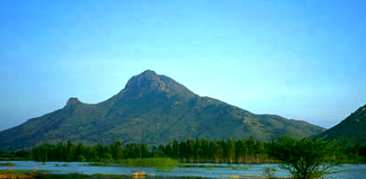

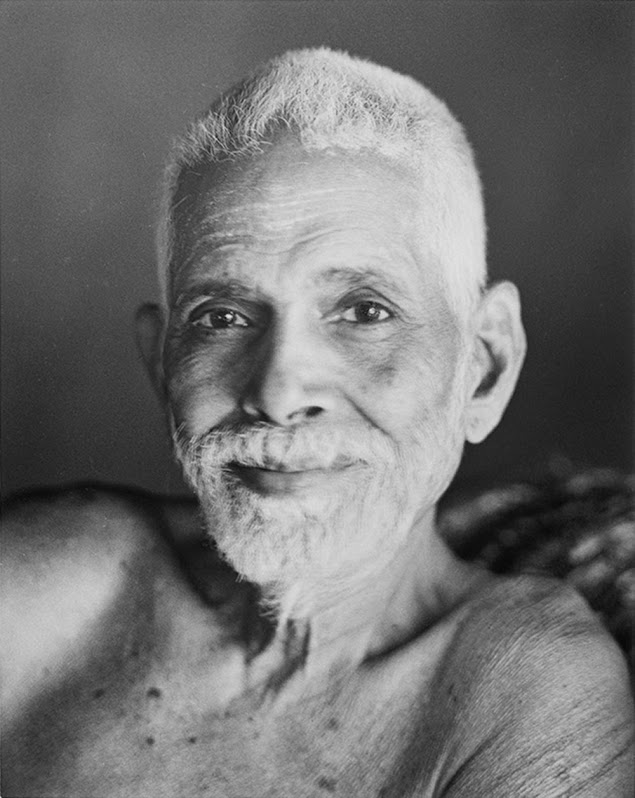
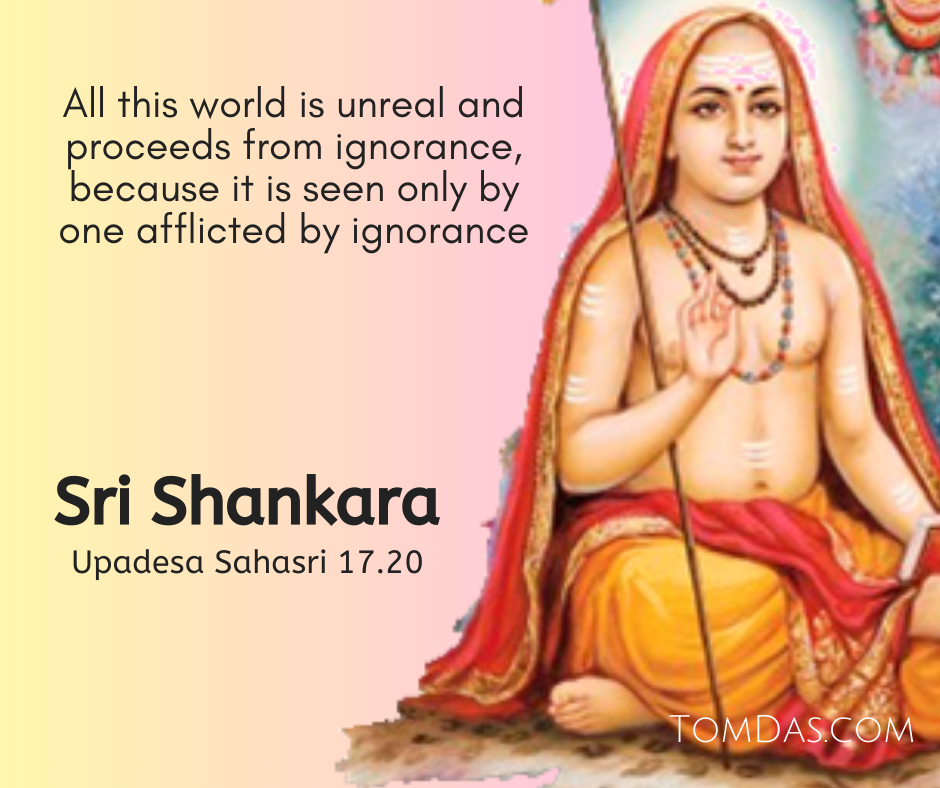
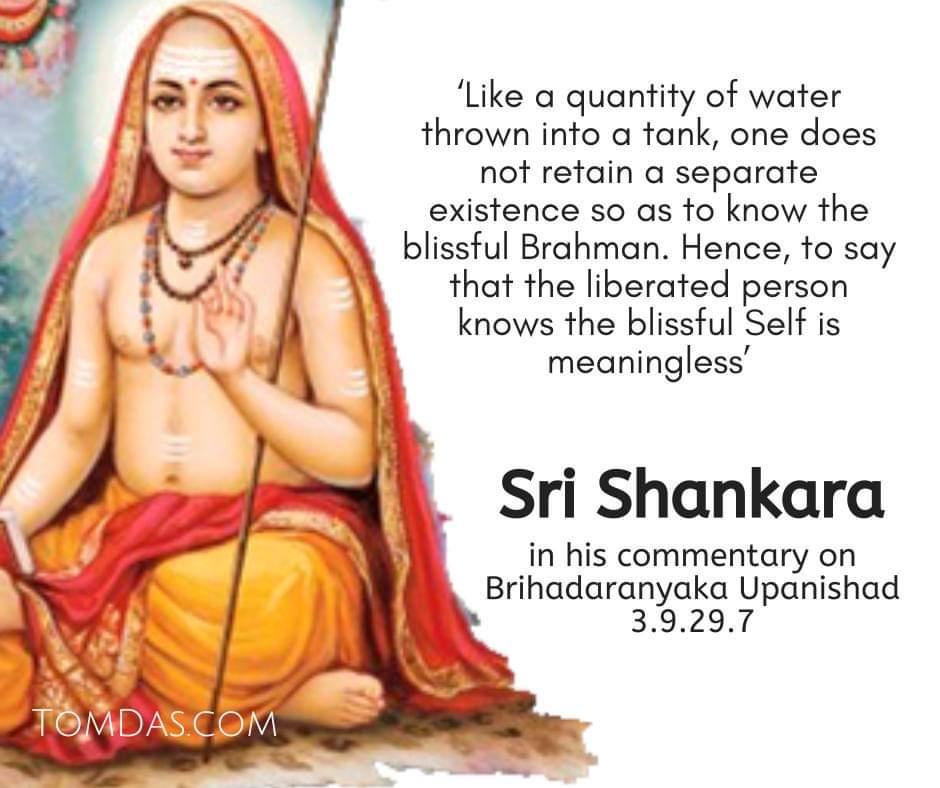
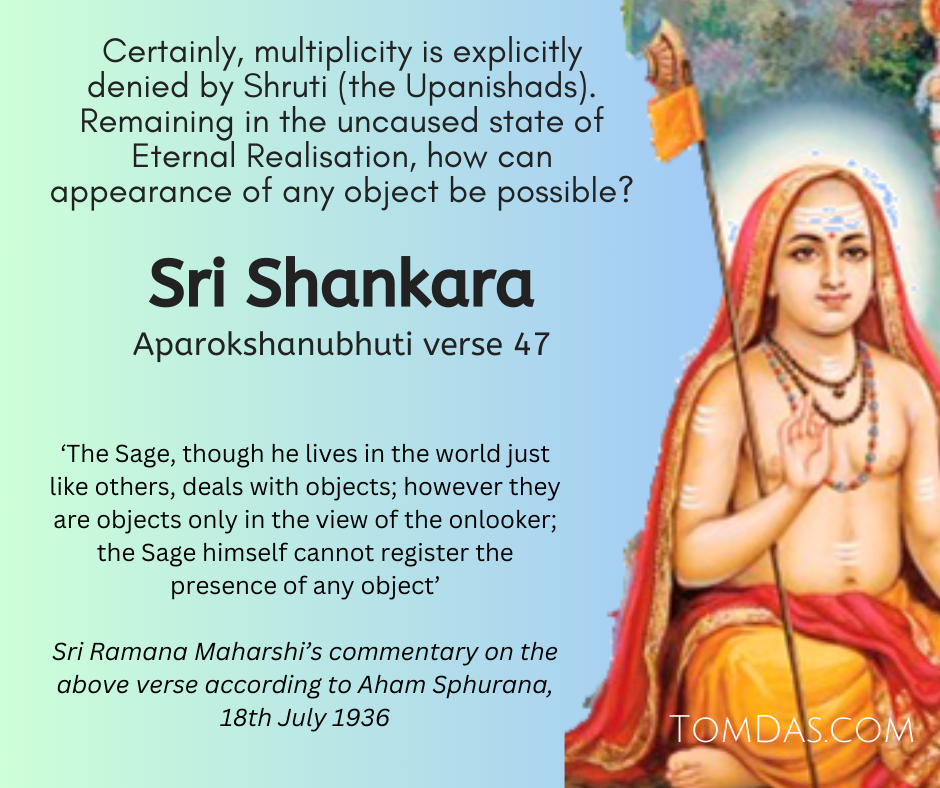
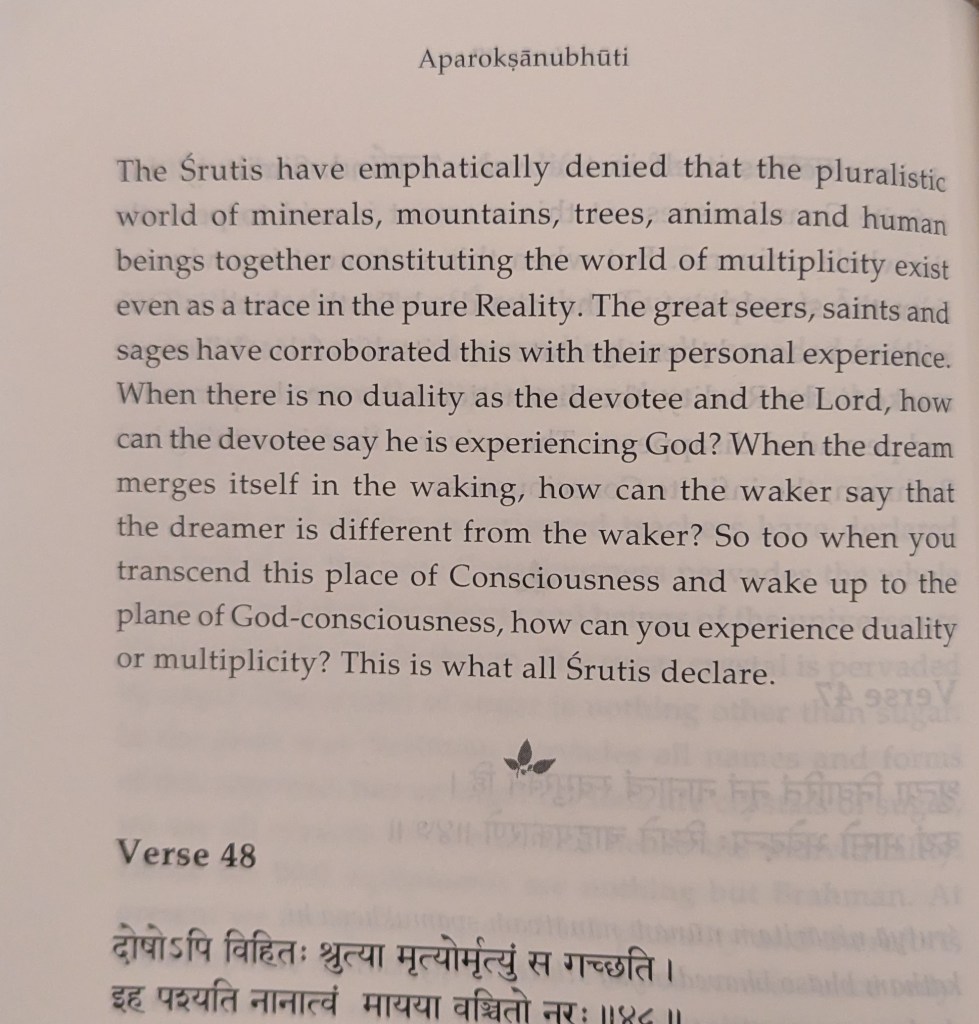
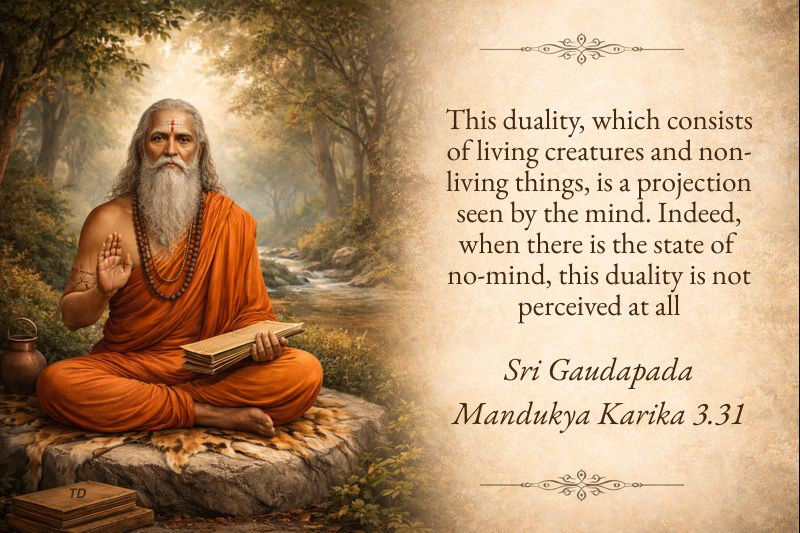
 Tom Das