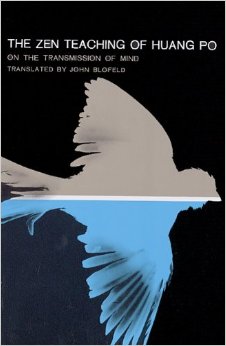
Regarding this Zen Doctrine of ours, since it was first transmitted, it has never been taught that men should seek for learning or form concepts. ‘Studying the Way’ is just a figure of speech. It is a method of arousing people’s interest in the early stages of their development
In fact, the Way is not something which can be studied. Study leads to the retention of concepts and so the Way is entirely misunderstood. Moreover, the Way is not something specially existing; it is something called Mahayana Mind – Mind which is not to be found inside, outside, or in the middle. Truly it is not located anywhere.
‘Studying the Way’ is just a figure of speech…In fact, the Way is not something which can be studied.
The first step is to refrain from knowledge-based concepts. This implies that if you were to follow the empirical method to the utmost limit, on reaching that limit you would still be unable to locate Mind.
The way is spiritual Truth and was originally without name or title. It was only because people ignorantly sought for it empirically that the Buddhas appeared and taught them to eradicate this method of approach.
The first step is to refrain from knowledge-based concepts.
Fearing that no one would understand, they selected the name ‘Way.’ You must not allow this name to lead you into a mental concept of a road. So it is said, ‘When the fish is caught we pay no more attention to the trap.’
When body and mind achieve spontaneity, the Way is reached and Mind is understood.
A shramana [seeker, monk] is so called because he has penetrated to the original source of all things. The fruit of attaining the shramana stage is gained by putting an end to all anxiety; it does not come from book-learning.
Taken from The Zen Teaching of Huang Po (Chun Chou record no. 29)
Q: Up to now, you have refuted everything which has been said. You have done nothing to point out the true Dharma [the true teaching, the true way] to us.
Huang Po: In the true Dharma there is no confusion, but you produce confusion by such questions. What sort of ‘true Dharma’ can you go seeking for?
Q: Since the confusion arises from my questions, what – will Your Reverence’s answer be?
Huang Po: Observe things as they are and don’t pay attention to other people. There are some people just like mad dogs barking at everything that moves, even barking when the wind stirs among the grass and leaves.’
Taken from The Zen Teaching of Huang Po (Chun Chou record no. 28)
Tom’s comments:
The questioner appears frustrated at not being able to obtain anything tangible from Huang Po. ‘What is the true teaching? What is The Way?’, he asks.
The master replies: you yourself create the confusion, the questions being evidence of this. Is there even a ‘true Dharma’ to be sought?
The answer? Just be with what is, see things as they are, don’t worry about the words and ideas of others caught up in their own illusions and fears.
Over the centuries, the lives of countless enlightened and self-realised sages have been studied and investigated, contrasting how they were prior to and after enlightenment, searching for clues as to what may aid other seekers in reaching total and complete liberation. Through this investigation several common qualities have been found which, if developed, aid the spiritual seeker to reach their goal.
In Vedanta, traditionally, there are four qualities (sadhana catustaya in Sanskrit) that a person should cultivate prior to engaging with the higher teachings of vedanta. These qualities, or qualifications, are deemed necessary to have, at least in some degree, before enlightenment can subsequently be achieved.
A similar notion that a certain level of attainment or qualification is required before higher teachings are taught are found throughout spiritual traditions, including many ‘no-path’ schools such as Dzogchen, Mahamudra and Zen (all types of Buddhism).
The idea is that without these qualities being present the seeker may have many insights and epiphanies, but the results will be unstable, with insights often coming and going, the results being a continued sense of lack and frustration. In a more mature seeker this may result in so-called ‘flip-flopping’, when the seeker has repeated experiences of being enlightened only to find, much to their dismay, that these experiences also end and suffering resumes.
The idea is that without these qualities being present the seeker may have many insights and epiphanies, but the results will be unstable, with insights often coming and going, the results being a continued sense of lack and frustration.
Conversely, when a seeker has developed these qualities, when exposed to the higher teachings of vedanta they make quick progress and quickly attain moksha (Freedom), which does not come and go.
Below Shankara, that great proponent of advaita vedanta (non-duality), tells us that these qualities are more important than other factors in attaining moksha. This quote is taken a text attributed to Shankara called vivekachudamani, one of his most famous texts and one of my favourites when I was a seeker:
Ultimate success in spiritual endeavours depends chiefly upon the qualifications of the seeker. Auxiliary conveniences such as time and place all have a place indeed, but they are essentially secondary.
Vivekachudamani by Adi Shankara, verse 14
The 4 Qualities (sadhana catustaya)
Here are the 4 qualities, sometimes known as the ‘4 Ds’, (with the Sankrit word in brackets):
Discrimination (viveka): being able to tell the difference between what is permanent and what is transient
Dispassion (vairagya): not desiring what is transient/impermanent; turing away from the impermanent towards what is permanent
Discipline (samadisatkasampatti): dropping trivial activities and turning towards the teaching and what is permanent.(Samadisatkasampatti more literally refers to the six treasures, each of which will be discussed in later posts).
Desire for freedom (mumuksutvam): this helps overcomes the ups and downs that life may bring and enables the seeker to overcome obstacles along the way.
There are several texts that outline these 4 qualities, perhaps the most succinct being Shankara’s Vivekachudamani which I have already mentioned above:
17. He alone is considered qualified to inquire after the supreme Reality (Brahman), who has discrimination, detachment, qualities of calmness etc., and a burning desire for liberation.
18. Great sages have spoken of four qualifications for attainment which, when present, succeed in the realization of Brahman and in the absence of which the goal is not attained.
Vivekachudamani by Adi Shankara, verses 17 & 18
Risk Factors vs qualifications
Before we look at each of the qualities in turn (in forthcoming articles), I would like to give my view. I don’t think these qualities are definite prerequisites for Freedom or self-realisation, important as they are. I think of them more as risk factors – ie. there may be an increased risk of enlightenment if these qualities are cultivated. Having the qualities does not guarantee enlightenment, and not having them does not bar one from Freedom.
It should be obvious really, but just because a particular tradition states something is necessary, doesn’t mean it is so – that’s my take on things at least. For me this Freedom is so simple, beyond simple actually, as it already is, that the whole notion of qualifications seems a bit arbitrary.
That being said, I do think they are of importance, and understanding and practising them will benefit many seekers, both in terms of increasing their day-to-day happiness, and in terms of realising Freedom.
It has been said that this knowledge of the four qualities required for enlightement has come about by looking at and studying the lives of hundreds of spiritual seekers and knowers-of-Freedom (Jnanis) and seeing if they had anything in common. When we go through each of the four qualities I hope that you will be able to see, in a commonsense way, how these qualities work together and the principles that underlie them, and how they can indeed aid the attainment of moksha (the realisation of Freedom).
At the same time I feel it is important that we bear in mind that there are also inherent problems with the notion of qualifications which must also be understood if one is to engage with them effectively, namely that the very idea of a progressive path to Freedom (implied by the need for qualifications) can itself be an obstacle to realising that-which-already-is.
I will explore each of the above 4D’s in turn in forthcoming articles.
…Other people are joyous,
as though they were at a spring festival.
I alone am unconcerned and expressionless,
like an infant before it has learned to smile.
Other people have more than they need;
I alone seem to possess nothing.
I am lost and drift about with no place to go.
I am like a fool, my mind is in chaos.
Ordinary people are bright;
I alone am dark.
Ordinary people are clever;
I alone am dull.
Ordinary people seem discriminating;
I alone am muddled and confused.
I drift on the waves on the ocean,
blown at the mercy of the wind.
Other people have their goals,
I alone am dull and uncouth.
I am different from ordinary people.
I nurse from the Great Mother’s breasts.
Tao Te Ching, verse 20
Tom’s comments:
This is one of my favourite verses of this wonderful text. I remember when I first read it as a university student in the 90s, I was particularly struck by the phrase ‘like an infant before it has learned to smile’. We can be free of needing to be happy, to smile, to conform, and we can simply be true to ourselves.
This world can seem so confusing. It can feel like everyone else seems to know what they want and where they are going. Of course, it’s such an illusion! How can anyone know what this is all about? If you think you know, you have surely missed the mark!
The Sage sees through all illusions, she sees through the faux-intelligence, goals and make-believe of people around her. The Sage knows he is but Nature expressing herself: he is dependent on her, as a child is on his mother’s breast milk, and he is also Her.
He sees the inherent unfathomable mystery at the heart of life and lovingly pities those who think ‘they understand’.
Stop thinking, and end your problems.
What difference between yes and no?
What difference between success and failure?
Must you value what others value, avoid what others avoid?
How ridiculous!
Tao Te Ching, verse 20
Tom’s comments:
Free of thoughts, where are your problems?
We do not need to shun thought in its entirety, just not buy into the suffering it creates through comparison and moral judgement.
We can see through the values, ideals and standards that other people and society dictate to us. We can see through the received wisdom of the day.
We can let go and be real, discover who we truly are – we can discover what it is to be human for ourselves and not simply force ourselves to fit into an ideological mould, no matter how reasonable it sounds. We can be who we are.
And who are we? Are we separate from the world that gave birth to us? Are we separate from the environment that shaped and influences us? Are we wholly good or bad? 0r can good come from bad and vice versa? Can failure lead to success?
I put it to you: all things are interdependent, and no things exist by themselves.
Dasbodh, written by Sri Samartha Ramdas in 1654, has been long used as a source text for seekers of enlightenment within the Advaita Vedanta tradition. Nisargadatta Maharaj’s lineage, the Inchegarei Sampradaya, were hugely inspired by this text and Nisargadatta used to regularly read from it.
Here Samartha Ramdas is pointing us to something very profound, yet very simple once realised. For more, compare this verse with that of Zen master Han-Shan here.
The following are verses from Guru Vachaka Kovai, one of the most authoritative texts of Ramana Maharshi’s teachings. The text was written by his disciple Muruganar and thereafter thoroughly checked and amended by Ramana. Here are some verses on the root cause of suffering, our notion of being a doer, with some commentary from Sri Sadhu Om, another devotee of Ramana:
466 The pure Bliss of peace will shine within only for those who have lost the sense of doership. For, this foolish sense of doership alone is the poisonous seed that brings forth all evil fruits.
467 Instead of going on, driven by the restless thoughts, performing actions such as ‘I should do this, I should give up that’ as if they were worthy to be done, acting according to how the Grace of God, the Lord of our soul, leads us, is the right form of truly worshipping Him
476 Whether or not one is performing actions, if the delusion of individuality – the ego, ‘I am the doer of actions’ – is completely annihilated, that is the attainment of actionlessness.
Sri Sadhu Om’s Comments: People generally think that the attainment of actionlessness is a state in which one should remain still, giving up all activities. But this is wrong. Sri Bhagavan Ramana proclaims that the loss of doership alone is the right kind of actionlessness, and this alone is nishkamya karma – action done without any desire for result.
470 The Lord who has fed you today will ever do so well. Therefore, live carefree, placing all your burden at His feet and having no thought of tomorrow or the future.
471 Know well that even performing tapas (spiritual practice) and yoga with the intention ‘I should become an instrument in the hands of the Lord Siva’ is a blemish to complete self-surrender, which is the highest form of being in His service.
Sri Sadhu Om’s Comments: Since even the thought ‘I am an instrument in the Lord’s hand’ is a means by which the ego retains its individuality, it is directly opposed to the spirit of complete self-surrender, the ‘I’-lessness. Are there not many good-natured people who engage themselves in prayers, worship, yoga and such virtuous acts with the aim of achieving power form God and doing good to the world as one divinely commissioned? It is exposed here that even such endeavours are egotistical and hence contrary to self-surrender.
Under the influence of false ego one thinks himself to be the doer of activities, while in reality all the activities are carried out by nature as natural process
Bhagavad Gita, Chapter 3 verse 27
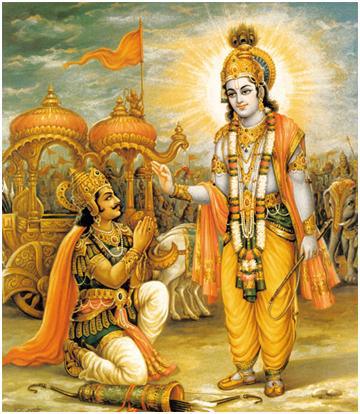
Here, in the Bhagavad Gita (The Lord’s Song), Krishna tells his friend Arjuna a great truth: that the notion of there being any separate entity that takes itself to be the doer is false. There is no doer, the ego is a false entity; there is only nature acting according to its own inherent principles.
This is one of my favourite verses from the Tao Te Ching, an ancient Chinese text overflowing with wisdom (If you have not read it, I highly recommend you do – it is easy to find a translation online).
Here in this verse we are instructed to let go, let go and let go again, until not even the notion of our very self remains. Here we have let go of all ideas of spiritual practice, of spiritual paths and of even letting go.
Then, perhaps, non-action will ‘happen’. This is the culmination of the so-called spiritual path: no-doer, nothing more remains to be done, nothing remaining undone – this is ‘mastery of the world’.
One who seeks knowledge, learns something new everyday. One who seeks the Tao, unlearns something new everyday.
Less and less remains, until you arrive at non-action. When you arrive at non-action, nothing will be left undone.*
Mastery of the world is achieved, by letting things take their natural course. You can not master the world, by changing the natural way.
Tao Te Ching verse 48
*An alternative translation is:
‘When there is no doer, nothing remains to be done’
In non-dual teachings, the basic teaching is that the sense of self that we presume ourselves to be is a fiction. What remains after this is seen is a mysterious and ordinary sense of ‘divine oneness’. One ramification of this teaching is that we can learn to see that we are not the authors of our own actions even though we appear to be. This is known as non-doership. This teaching is often stated explicitly in non-dual traditions such as Advaita Vedanta, Zen, Dzogchen and Taoism.
In theistic traditions like much of Hinduism and the Abrahamic traditions of Judaism, Christianity and Islam, non-duality is still expressed, but its form often differs. Continue reading →

 Stop thinking, and end your problems.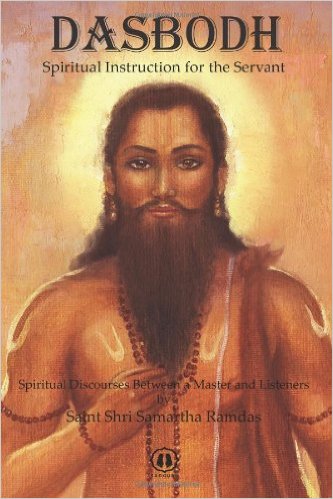
 Tom Das