Annamalai Swami: ‘Don’t sit and meditate’

Annamalai Swami: Bhagavan watched me very closely in the years that I served him in the ashram. One time I went to the Mother’s temple where many people were talking about worldly matters.

Bhagavan called me back, saying, ‘Why should you go to that crowd? Don’t go to crowded places. If you move with the crowd, their vasanas will infect you.’

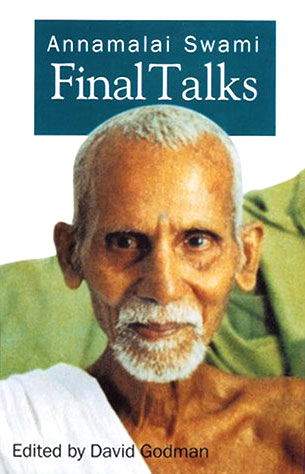
annamalai swami final talks

Bhagavan always encouraged me to live a solitary life and not mix with other people. That was the path he picked for me. Other people got different advice that was equally good for them.

But while he actively discouraged me from socialising, he also discouraged me from sitting quietly and meditating during the years that I was working in the ashram. In this period of my life, if Bhagavan saw me sitting with my eyes closed he would call out to me and give me some work to do.

On one of these occasions he told me,

‘Don’t sit and meditate. It will be enough if you don’t forget that you are the Self. Keep this in your mind all the time while you are working. This sadhana will be enough for you. The real sadhana is not to forget the Self. It is not sitting quietly with one’s eyes closed. You are always the Self. Just don’t forget it.’

Bhagavan’s way does not create a war between the mind and the body. He does not make people sit down and fight the mind with closed eyes. Usually, when you sit in meditation, you are struggling to achieve something, fighting to gain control over the mind. Bhagavan did not advise us to engage in this kind of fight. He told us that there is no need to engage in a war against the mind, because mind does not have any real, fundamental existence. This mind, he said, is nothing but a shadow. He advised me to be continuously aware of the Self while I did the ordinary things of everyday life, and in my case, this was enough.

The above is an excerpt taken from Final Talks by Annamalai Swami, p. 67

Integrating knowledge, spontaneous action

This post is continued from Discarding Knowledge as Ignorance

Do you go around repeatedly saying your name so that you remember it? Do you have to walk around saying “I am Tom, I am Tom, I am Tom?” (obviously substitute in your name).

Or do you spend most of your life not even thinking about your name, but when someone calls out your name, the understanding ‘My name is Tom’ automatically acts: you turn your head and respond?

It’s the same with understanding there is no doer: initially you may need to think about it, go through the reasoning, and realise there is no evidence for a doer. It is a conscious process. Because we have been conditioned to think of ourselves as being a doer, there is often a process of deconditioning.

It may also take time for all the suffering based on the ‘I am the doer’ notion to fall away. Other notions such as ‘I am to blame’ or ‘I could/should have done it differently’ or ‘I am not worthy’ may still all be at play. All these depend on the root belief ‘I am a separate doer-entity’. Again, there may be a conscious process of applying this understanding in order to deal with suffering as it arises and uprooting the associated beliefs upon which suffering depends.

But once this has been done, then we don’t need to think about it. The knowledge of ‘there is no doer’ has been ingrained into us. We do not need to think about it, we no longer need to repeat the process of understanding.

But just as when someone asks your name, you can spontaneously respond ‘My name is ____’, when someone asks you ‘Are you a doer?’, you can instantly reply ‘there is no doer’.

This post is continued here: Am I the body? Am I not the body?

Why seeing/understanding alone may not be enough

This post follows on from my previous 3 posts relating to the body:

  1. Do you know for certain that you are the body?
  2. Are you or are you not the body?
  3. Why does understanding the body matter?

Seeing this is not always enough

However, for many people simply seeing there is no doer is not enough. Why? Well we have lived our lives for many years with the deeply ingrained belief that we are doers, with the belief that we are the creator of our thoughts and instigators of our actions. This habitual belief is not so easily washed away, and even when seen, it can continue to operate and cause us to suffer.

In vedanta a common methodology used to counteract this is to utilise a concept that opposes and counteracts the ignorance:

‘I am not the body’ is a tool by which one can weed out the ‘I am the body’ notion.

Practice of the knowledge ‘I am not the body’ is a conceptual tool by which one can weed out the belief in ‘I am the body’ concept.

Note that ‘I am not the body’ is a concept. If believed in, ie. if considered to be genuinely true, it would be a belief. You do not have to believe a concept is true in order to benefit from it. You can use the concept either way, whether you believe in it or not.

To be continued in my next post: Integrating the understanding of no-doer

Are you or are you not the body?

This follows on from my previous post.

It is an observable fact that our direct experience alone does not provide us with sufficient evidence to say whether or not objects in the world arise solely from consciousness (ie. philosophical idealism), or whether consciousness is a product of the material word (eg. the human brain) which in turn perceives an image of that material world (ie. philosophical realism).

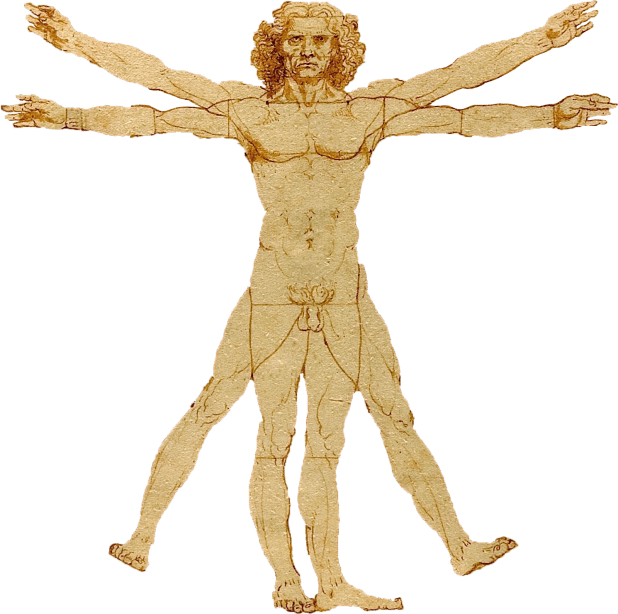
Portale_Leonardo_da_Vinci.png

Not that these are the only two possibilities – there other theories that could also account for our present experience, and perhaps other explanations that our limited human minds are incapable of understanding – but for the purposes of this article we will not go into this.

The point is, from our direct experience alone, we do not know if what we call the body is solely an image that arises in our consciousness, or if that image is a representation of a real body somewhere outside our consciousness which in turn gives rise to consciousness.

To be continued here: Why does understanding the body matter?

Do you know for certain that you are the body?

Sculpture Male Body Naked Gestures Man Human
Do you know for certain that you are the body?
Do you know for certain that you are not the body?
The honest answer to both these questions is ‘no’.
‘I am not the body’ is a tool by which one can weed out the ‘I am the body’ notion.
Then once the work is done, like the thorn used to remove a thorn, throw them both away.
What is reality then?
Reality is simply whatever is left over when concepts of self and no-self are no longer believed in.
Reality is the ineffable indescribable indefinable ever-obvious ever-present ‘now’.
Tom Das

These verses will be elucidated further in upcoming posts:

  1. Are you or are you not the body?
  2. Why does understanding the body matter?
  3. Why seeing/understanding alone may not be enough
  4. Integrating the understanding of no-doer
  5. Problems with utilising conceptual tools
  6. Practising Knowledge
  7. Discarding knowledge as ignorance
  8. Integrating knowledge/spontaneous action
  9. Am I the body?

The sense of being a doer vs. no doer

When the doer* is seen to be an illusion, an imagined fiction, the sense/feeling of being a doer may still continue. The sense/feeling of being a doer can arise like any other phenomena arises.

And notice – it arises spontaneously, meaning there is no doer there doing it. You see! It can be seen that even the sense of being a doer is something that has no doer behind it – it just happens, by itself.

So, in my daily life I often feel like I’m doing things, but there is an understanding there that there is no doer-entity doing it. It is all just happening.

This is the difference between experience and knowledge/understanding: I may feel like a doer, but I know/understand I am not a doer.

It is similar to realising the sun does not orbit a stationary earth, even though the appearance of the sun rising and setting each day continues. Or if you realise that a mirage is an illusion, the illusion persists even when not believed in. The sense of doership can continue even when the understanding ‘there is no evidence for a doer’ is present.

*By doer I mean the notion of being a separate entity which creates or authors thoughts and actions

Creating then resolving the duality of awareness vs objects in awareness

The following are adapted from recent Facebooks posts of mine
http://www.facebook.com/tomdas.nd

The body-mind entity can accept, reject or be indifferent to things. This is relative acceptance and is an action that can be performed. Awareness is all-accepting, always embracing ‘what is’. This is total/absolute acceptance and is not something that you can do, but something that can be recognised as already being here.


Awareness cannot accept or reject anything, as it does nothing. It just is: present and aware. All actions occur at the level of the body and mind (and world).

Awareness could be said to unconditonally/choicelessly ‘accept’ everything that occurs within it, in the same way a mirror ‘choicelessly accepts’ the reflection within it.

…but actually, as this example illustrates, the mirror-like awareness is not actually doing anything apart from ‘being itself’.


In the way I speak about this, awareness cannot identify with anything. It is only the mind that identifies with/as the mind.

Or to put it differently, thought imagines it’s a thinker and believes itself.

Awareness is ever-free, just like the mirror in the example above


Through identifying with choiceless awareness/consciousness for sometime, the ego/doer is seen through and no longer identified with. Then the identification as being choiceless awareness/consciousness also can be dropped.

What we are left with is ‘just this’: simple, direct, beyond words. This is the ‘realm beyond verbal teachings’.
Here the apparent duality conceptualised by differentiating (viveka) between that-which-changes (objects) and that which doesn’t change in our experience (the subject, I) is resolved into non-duality.

Non-duality meetings in London

A GENUINE REALISATION OF FREEDOM IN ORDINARY EVERYDAY LIFE

ND London

The course of structured teachings I’ve been teaching recently are due to restart this Thursday 7pm in Kingston, London, and the following week online.

As both a parent and a working doctor, my teachings are geared towards a genuine realisation of Freedom in everyday ordinary life.

It seems there are lots of conflicting teachings out there which can add to the confusion for a seeker of truth: are practices required? Is there anything you can do to help ‘get this’? Does the ego disappear? What happens when we die? Is there really ‘nobody here’? What about self-inquiry? The structured teachings, over the next few weeks, aim to address all these apparently contradictory points and more…

While this really can’t be put into words, concepts and practices can apparently help us along the way. Sometimes. It seems that some teachings are more effective than others, depending on ‘where the seeker is’.

The result? Seeing the Freedom that already is.

For more details see http://meetu.ps/e/.nwhrrlywdbmb/1GbHK/d or tomdas.com/events

Q: Who sees there is no doer? (Self-Enquiry, Ramana, Who am I?)

Q: You say there is no doer, and that this is a key point in your teaching, but who or what sees there is no doer? 

Tom: Why do you ask? What do you hope to gain from that question? Do you think that knowing the answer to this question will set you free? Do you think the answer to this question can be found in words? Contemplate on these questions.

It’s easy to say that ‘I see’, or that ‘awareness sees’, but does this really get us anywhere? What is the concept of awareness but another way of verbalising that something is being perceived. When we say ‘awareness sees’ or ‘I am aware’, all we are really saying is that ‘something is seen’. It’s tautology, just a different way of saying the same thing.

wp-1474790287732.png

Q: So why do so many non-dual teachers prescribe self-inquiry as a method?

Tom: The real point of asking ‘who or what sees’ (ie. self enquiry) is to notice that what we commonly take ourselves to be is actually something that is seen, and is not the seer/doer at all.  What we, in ignorance or misapprehension, commonly take to be the subject is actually experienced as an object(s). This is also the point of the awareness teachings, to see through the doer – not to get caught up and identified with a concept of awareness.

We commonly take ourself to be the body-mind apparatus, but it can be seen that the body and mind are both objects that are perceived. The body and mind, as far as our direct experience goes, are parts of our experience, they are parts of ‘the perceived’. There is no evidence that they are perceivers of the experience. (That is not to say that they are not representations of the subject/perceiver within our consciousness, but just that there is no evidence either way).

Q: OK… (pause)

Tom: So, back to your question: what is it that sees?

Here’s the shorter answer: that which sees is that which sees. Why name it? Does naming it mean we know it any better? Are we any the wiser for naming it or calling it ‘awareness’ or ‘consciousness’ or ‘me’ or ‘I’?

Why settle for verbal explanations or spiritual-sounding slogans? Instead question these statements. Don’t get rid of one dogma and replace it with another. Be true to yourself, be true to what you know and your own experience:

Things are seen – that much I know. What sees? – I do not know…

wp-1474790287732.pngQ: But don’t we need to know exactly what it is that sees?

Tom: No. Not only do we not need to know what sees, we cannot know what sees (as an object). We only know that we see, and not what sees. That is enough. And that’s our actual experience, right? We don’t need to take on a new belief such as the belief that we are awareness. Sure, we are aware. or you could say awareness is here, but we don’t have to go further and say ‘I am awareness’. Let’s just stick to our experience and not pretend to know something that we don’t. As Ramana Maharshi says:

‘The state we call realization is simply being one’s self, not knowing anything or becoming anything.’

There are a few other aspects to the teachings too, which I’ll quickly summarise for you. I go into more detail on the group meetings, but briefly:

1. We need to stop mistaking certain objects (ie. the appearance of the body-mind organism) for being the subject. That is a key purpose of what I call the ‘awareness teachings’ that are found in Shankara’s Advaita Vedanta and in many schools of Mahayana Buddhism.

2. We need to notice and understand deeply that all objects are transient – they all come and go, and that no object brings lasting satisfaction. As this realisation deepens and takes root, this leads us to naturally turn away from depending on objects as a source of happiness. This leads to our addictive and suffering-causing desires (vasanas) to naturally fall away. Suffering dissolves away and joy naturally rises in its place, rearing its head from time to time as it pleases.

3. We need to see that all objects comes and go spontaneously, including thoughts and actions, and so realise that there is no doer-entity controlling it all. What we call the mind is just a spontaneous succession of thoughts, with no evidence of any entity controlling it. This is the real point of self-enquiry.

As Ramana Maharshi said when a questioner asked him about self-enquiry:

‘Reality is simply the loss of ego. Destroy the ego by seeking its identity.  Because the ego is no entity it will automatically vanish and reality will shine forth by itself.
This is the direct method. All other methods retain the ego. In those paths so many doubts arise, and the eternal question remains to be tackled. But in this method the final question is the only one and is raised from the very beginning.’

When we see the false to be false, meaning when we see the doer (ego) is an illusion, whatever remains is reality. It just is whatever is. It doesn’t have to be named, known or understood – it’s just what is.
Ranjit Maharaj: use a thorn to remove a thorn, then throw them both away

Ranjit Maharaj

This passage below is taken from ‘Illusion vs. Reality’ (page 6) by Shri Ranjit Maharaj. Shri Ranjit’s guru (Shri Siddharameshwar Maharaj) was also the Guru of Nisardagatta Maharaj, making Ranjit and Nisargadatta ‘guru-brothers’, ie. contempories in the same teaching lineage.

The address is false but when you reach the goal, it is Reality. In the same way, all the scriptures and the philosophical books are meant only to indicate that point, and when you reach it they become non-existent, empty.

…For example, to remove a thorn in your finger you use another thorn; then you throw both of them away. But if you keep the second thorn which was used to remove the first one, you’ll surely be stuck again.

To remove ignorance, knowledge is necessary, but finally both must dissolve into Reality. Your Self is without ignorance, without knowledge.

…If you keep the second thorn, which means knowledge, even if it is a golden thorn, you’ll be stuck [by the second thorn].

…Knowledge is a great thing but it must be only a remedy. When the fever goes off thanks to the medicine you take, you must stop taking it. Don’t prolong the treatment or you will create more problems.

Knowledge is necessary only to remove the disease of ignorance. The doctor will always prescribe a limited dosage!

Also see here for more