The Union of Meditation and Self-Enquiry – The two paths of Vedanta – Panchadasi by Vidyaranya Swami

idf631

Traditionally there are two paths to liberation according to Advaita Vedanta (Nondual Vedanta). In Panchadasi, a traditional advaita vedanta text, Vidyaranya Swami refers to them as the path of Meditation and that of Self-Enquiry.

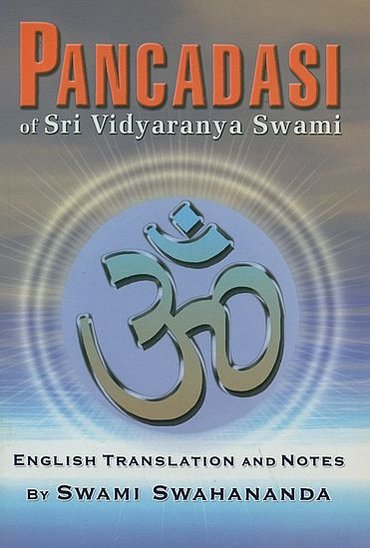
Panchadasi was written by Vidraranya Swami (1380-1386) over 600 years ago and contains the essence of the vedanta scriptures over 15 chapters (‘pancha’ means 5 and ‘dasi’ means 10, so together they refer to 15 chapters).

  • This following excerpt from chapter 1 gives an overview of the vedantic path to moksha.
  • The next excerpt from chapter 9 shows how the 2 vedantic paths in the title are in fact the same.
  • I have then chosen a few more excerpts from subsequent chapters aimed at encourging the seeker in their sadhana (spiritual practice) and extolling the virtues of meditation.

My comments are interspersed in red and bold type has been also added by myself for emphasis.

The full text of Panchadasi is available here for download

Best wishes

Tom


Overview of the path – from Chapter 1:

1.40. By discrimination of the subtle body (and recognition of its variable, transient character), the sheaths of the mind, intellect, and vital airs are understood to be different from the Self, for the sheaths are conditions of the three gunas, and differ from each other (qualitatively and quantitatively).

This indicates that the mind is able to discriminate (viveka – ie. to differentiate the unchanging self from the changing gross and subtle objects experienced) between the self and the gross and subtle bodies – ie. the body and mind. However the mind cannot so easily discriminate the self from the causal body in which the latent tendencies remain dormant. For this meditation is helpful, as follows:

1.41. Avidya (manifested as the causal body of bliss sheath) is negated in the state of deep meditation (in which neither subject nor object is experienced), but the Self persists in that state; so it is the invariable factor. But the causal body is a variable factor, for though the Self persists, it does not.

This is referring to samadhi, in which the subject-object duality has been removed. Also see Chapter 9 verse 126 of Panchadasi:

‘When meditation on the attributeless Brahman is mature it leads to Samadhi. This state of intense concentration at case leads on to the Nirodha state in which the distinction between subject and object is eliminated.’

This experience in meditation allows one to realise that the causal body also is not the Self:

1.42. As the slender, internal pith of munja grass can be detached from its coarse external covering, so the Self can be distinguished through reasoning from the three bodies (or the five sheaths). Then the Self is recognised as the supreme consciousness.

1.52. The Self is untouched by doubts about the presence or absence of associates, connotations and other adventitious relationships, because they are superimposed on it phenomenally.

Like a mirror is untouched by the contents of the reflection, like the cinema screen is untouched by the scenes in the movie, the Self remains untouched and unaffected by life.

Now Vidyaranya tells us of the advaitic path, consisting of sravana, manana, nididhyasana and samadhi. Shankara does the same here.

1.53. The finding out or discovery of the true significance of the identity of the individual self and the Supreme with the aid of the great sayings (like Tat Tvam Asi) is what is known as sravana. And to arrive at the possibility of its validity through logical reasoning is what is called manana.

Sravana, literally meaning hearing, means to hear or listen to the teachings. To thereafter think about the teachings and their logic is called manana.

1.54. And, when by sravana and manana the mind develops a firm and undoubted conviction, and dwells constantly on the thus ascertained Self alone, it is called unbroken meditation (nididhyasana).

Sravana and manana naturally lead to unbroken meditation, or nididhyasana. This eventually leads to removal of the subject-object duality and culminates in samadhi:

1.55. When the mind gradually leaves off the ideas of the meditator and the act of meditation and is merged in the sole object of meditation. (ie. the Self), and is steady like the flame of a lamp in a breezeless spot, it is called the super-conscious state (samadhi).

1.56. Though in samadhi there is no subjective cognition of the mental function having the Self as its object, its continued existence in that state is inferred from the recollection after coming out of samadhi.

There is no experience as such in samadhi, as the mind (and memory) does not temporarily exist, so the state is not known as such at the time. The next verse tells us that it persists dependent upon ‘effort and will made prior to its achievement’ and through ‘constant efforts’:

1.57. The mind continues to be fixed in Paramatman in the state of samadhi as a result of the effort of will made prior to its achievement and helped by the merits of previous births and the strong impression created through constant efforts (at getting into samadhi).

1.58. The same idea Sri Krishna pointed out to Arjuna in various ways e.g., when he compares the steady mind to the flame of a lamp in a breezeless spot.

He is referring to Krishna’s teaching to Arjuna in the Bhagavad Gita, Chapter 6 verse 19:

‘Just as a lamp in a windless place does not flicker, so the disciplined mind of a yogi remains steady in meditation on the self.’

1.59. As a result of this (nirvikalpa) samadhi millions of results of actions, accumulated in this beginningless world over past and present births, are destroyed, and pure dharma (helpful to the realisation of Truth) grows.

1.60. The experts in Yoga call this samadhi ‘a rain cloud of dharma’ because it pours forth countless showers of the bliss of dharma.

1.61. The entire network of desires is fully destroyed and the accumulated actions known as merits and demerits are fully rooted out by this samadhi.

1.62. Then the great dictum, freed from the obstacles (of doubt and ambiguity), gives rise to a direct realisation of the Truth, as a fruit in one’s palm – Truth which was earlier comprehended indirectly.

The above 4 verses indicate how powerfully purifying nirvikalpa samadhi is in rooting out the habitual tendencies to identify with the body-mind, when gives rise to direct realisation of the Truth or Liberation.

1.63. The knowledge of Brahman obtained indirectly from the Guru, teaching the meaning of the great dictum, burns up like fire all sins, committed up to that attainment of knowledge.

1.64. The direct realisation of the knowledge of the Self obtained from the Guru’s teaching of the great dictum, is like the scorching sun, that dispels the very darkness of Avidya, the root of all transmigratory existence.

1.65. Thus a man distinguishes the Self from the five sheaths, concentrates the mind on It according to the scriptural injunctions, becomes free from the bonds of repeated births and deaths and immediately attains the supreme bliss.

In summary, the path is viveka (differentiating the unchanging self from the changing objects experienced) plus unbroken meditation on the self.


We see a similar reasoning given in Chapter 9:

The unity of meditation and self-enquiry – From Chapter 9:

9.126. When meditation on the attributeless Brahman is mature it leads to Samadhi. This state of intense concentration leads on to the Nirodha state in which the distinction between subject and object is eliminated.

‘Nirodha’ is the term used in yoga to indicate what in vedanta is known as nirvikalpa samadhi. Ceaseless meditation on the Self leads to the knowledge ‘I am Brahman’:

9.127. When such complete cessation of mental activity is achieved, only the association-less entity (Atman) remains in his heart. By ceaseless meditation on It based on the great Sayings, arises the knowledge ‘I am Brahman’.

9.128. There is then a perfect realisation of Brahman as the immutable, association-less, eternal, self-revealed, secondless whole, as indicated in the scriptures.

The author backs up his above statements by showing how the same ideas are present in the Holy Upanishads which are the most important texts in Vedanta teachings and hold the highest authority:

9.129. The Amritabindu and other Upanishads recommend Yoga for the same object. It is clear therefore that meditation on the attributeless Brahman is superior to other types of worship.

A warning for those who give up their meditation:

9.130. Those who give up meditation on the attributeless Brahman and undertake pilgrimages, recitations of the holy formulas and other methods, may be compared to ‘those who drop the sweets and lick the hand’.

Here the questioner points out the 2 main vedantic paths to liberation, one being meditation or yoga, the other being self-enquiry. The following verses indicate that the higher and quicker path is self-enquiry, but both paths are actually the same in the end:

9.131. (Doubt): This applies also to those who meditate on the attributeless Brahman giving up enquiry into Its nature. (Reply): True, therefore only those who are not able to practise enquiry have been asked to meditate on the attributeless Brahman.

9.132. Those who are very fickle-minded and agitated do not have the knowledge of Brahman by the practice of enquiry. Therefore control of the mind is the chief means for them. By it their mind becomes free from distractions.

9.133. For those whose intellects are no longer distracted nor restless but are merely covered by a veil of ignorance, the analytical system called Sankhya (intellectual enquiry) is prescribed. It will quickly lead them to spiritual illumination.

The above verse indicates that for enquiry to work, the mind must already be pure and stable and with only a small amount (‘a veil’) of ignorance. If not, then a calming practice, such as meditation, karma yoga or surrender/bhakti are required.

9.134. ‘The state of spiritual balance is obtainable by both the Sankhyas (those who follow the path of enquiry) and the Yogis (those who practise meditation). He really knows the meaning of the scriptures who knows that the paths of enquiry and meditation are the same’.


The path of meditation

Continuing with Chapter 9, here follows several statements from Shruti (ie. the Upanishads), the most authoritative Vedanta texts, extolling the virtues and efficacy of the path of meditation

9.138. So the future life of a man is determined by the nature of his thoughts at the time of death. Then as a devotee of the Personal God is absorbed in Him, so a meditator on the attributeless Brahman is absorbed in It and obtains Liberation.

9.140. As by meditation on the Personal God knowledge of the nature of Ishvara arises, so by meditation on the attributeless Brahman, knowledge of Its nature arises and destroys the ignorance which is the root of rebirth.

9.141. A meditator becomes Brahman who is ‘unattached, desireless, free from body and organs and fearless’. Thus the Tapaniya Upanishad speaks of liberation as the result of meditation on the attributeless Brahman.

9.142. By the strength of meditation on the attributeless Brahman knowledge arises. So the scriptural verse, ‘Verily there is no other path to liberation (except knowledge)’ does not conflict with this.

9.143. So the Tapaniya Upanishad points out that liberation comes from desireless meditation. The Prasna Upanishad also says that by meditation with desire one enters into the region of Brahma.

9.146. Such a worshipper, by virtue of his meditation on the attributeless Brahman, enters the world of Brahma and there obtains direct knowledge of Brahman. He is not born again, he gets ultimate release at the end of the four Yugas.

9.147. In the Vedas meditation on the holy syllable Aum in most places means meditation on the attributeless Brahman, though in some places it means meditation on Brahman with attributes.

9.148. Pippalada being asked by his pupil Satyakama says that Aum means Brahman both with and without attributes.

9.149. Yama too, questioned by his pupil Nachiketas, replied that he who meditates on Aum knowing it as the attributeless Brahman obtains the fulfilment of his desires.

9.150. He who meditates properly on the attributeless Brahman gets direct knowledge of Brahman either in this life or at the time of death or in the world of Brahma.

9.151. The Atma Gita also clearly says that those who cannot practise discrimination should always meditate on the Self.

9.152. (The Self as if says): ‘Even if direct knowledge of Me does not seem to be possible, a man should still meditate on the Self. In the course of time, he doubtlessly realises the Self and is freed’.

9.153. ‘To reach treasures deeply hidden in the earth, there is nothing for it but to dig. So to have direct knowledge of Me, the Self, there is no other means than meditation on one’s Self’.

9.155. Even if there is no realisation, think ‘I am Brahman’. Through meditation a man achieves even other things (like the Deities), why not Brahman who is ever-achieved?

A stark warning not to stop meditating before the goal is reached:

9.156. If a man, who is convinced by his experience that meditation, practised day by day, destroys the idea that the not-Self is the Self, nevertheless becomes idle and neglects meditation, what difference, tell us, is there between him and a brute ?

9.157. Destroying his idea that the body is the Self, through meditation a man sees the secondless Self, becomes immortal and realises Brahman in this body itself.

9.158. The meditator who studies this Chapter called the ‘Lamp of Meditation’, is freed from all his doubts and meditates constantly on Brahman.


From Chapter 11:

Chapter 11 further focuses upon the role of meditation as opposed to inquiry:

11.110. In the Maitrayani Upanishad of the Yajur Veda, sage Sakayanya spoke of the great bliss experienced in Samadhi to the royal sage Brihadratha while discoursing on Samadhi.

11.111. ‘As fire without fuel dies down and becomes latent in its cause, so the mind, when its modifications have been silenced, merges in its cause’.

11.112. ‘To the mind fixed on Reality, merged in its cause and impervious to the sensations arising from the sense-objects, the joys and sorrows (together with their occasions and materials) experienced as a result of the fructifying Karma seem unreal’.

11.114. ‘Through the purification of his mind a man destroys the impressions of his good and evil Karma and the purified mind abiding in Atman enjoys undiminishing bliss’.

11.115. ‘If a man were to focus his mind on Brahman, as he commonly does on the objects of senses, what bondage would he not be free from ?’

11.116. ‘Mind has been described as of two types, pure and impure. The impure is that which is tainted by desires, the pure is that which is free from desires’.

11.117. ‘The mind alone is the cause of bondage and release. Attachment to objects leads to bondage and freedom from attachment to them leads to release’.

11.118. ‘The bliss arising from absorption in the contemplation of the Self, when all sins and taints are washed off through the practice of Samadhi, cannot be described in words. One must feel it in one’s own heart’.

11.119. Though it is rare for men to keep their minds long in the state of absorption (Samadhi), still even a glimpse of it confers conviction about the bliss of Brahman.

11.121. Such a man ignores the bliss experienced in the state of mental quiescence and is ever devoted to the supreme bliss and meditates on it.

11.122. A woman devoted to a paramour, though engaged in household duties, with all the time be dwelling in mind on the pleasures with him.

11.123. Similarly the wise one who has found peace in the supreme Reality will be ever enjoying within the bliss of Brahman even when engaged in worldly matters.

11.124. Wisdom (Jnana) consists in subjugating the desires for sense-pleasure, even when the passions are strong and in engaging the mind in meditation on Brahman with the desire to enjoy the bliss.

In Ramana’ Maharshi’s ‘Who am I?’, the question as to the nature of Jnana arises and is simply answered:

Questioner: What is wisdom-insight (jnana-drsti)?

Ramana Maharshi: Remaining quiet is what is called wisdom-insight.

See here for more

11.125. A man carrying a burden on his head feels relief when he removes the load; similarly a man freed from worldly entanglements feels he is in rest.

11.126. Thus relieved of burden and enjoying rest, he fixes his mind on the contemplation of the bliss of Brahman, whether in the state of detachment or experiencing pain or pleasure according to fructifying Karma.

11.130. Enjoying both the bliss of Brahman taught in the scriptures and the worldly bliss unopposed to it, the Jnani of truth knows them both in the same way as one who knows two languages.

11.131. When the Jnani experiences sufferings, he is not disturbed by them as he would have been before. Just as a man half-immersed in the cool water of the Ganges feels both the heat of the sun and the coolness of the water, so he feels the misery of the world and the bliss of Brahman at the same time.


And to finish, one of my favourite verses here:

From Chapter 13:

13.3. The world is born of bliss, it abides in bliss and is merged in bliss. How then can it be anything other than this bliss?


Shankara on the Mind, Samadhi (stillness of mind), Manonasa (destruction of mind), and Liberation

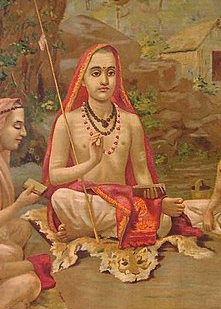
Shankara shankaracharya

Also see:

   Shankara: How to Meditate for Self-Realisation

Gaudapada – The Self is attainable by Samadhi

The following are quotes from Shankara’s Vivekachudamani on the Mind, samadhi (stillness of mind), manonasa (destruction of mind) and it’s relationship to moksha (liberation). There are many false teachings around, so I hope you find these teachings to be helpful and instructive.

Vivekachudamani is one of the most important in the Advaita Vedanta tradition. Attributed to Shankara, for centuries it has traditionally been used as a practice manual for seekers of spiritual liberation. Many mahatmas (great souls) have considered this text to contain all that is required to know in order to attain liberation.

Swami Chinmayananda, that great Sanskrit scholar and traditional teacher of Advaita Vedanta, said Vivekachudamani contained the distilled wisdom from the Upanishads and Bhagavad Gita and presents it in a systematic readable form for a seeker of liberation, in which both ‘the goal and path are exhaustively dealt with’. He wrote of Vivekachudamani that ‘no other help is needed’ other than this text on the quest to liberation.

A very young (and already enlightened) Sri Ramana Maharshi also translated the entire text into Tamil for the benefit of his companions and devotees who were unable to read Sanskrit, in what was perhaps Ramana’s first spiritual work. The fact that Ramana wrote very little yet bothered to translate this in its entirely, that this was the first scripture he chose to translate, and that this is the longest of the scriptures he ever translated (to my knowledge) perhaps gives you an indication of the significance of this text. Ramana himself wrote an introduction to his own translation and in it he said that Vivekachudamani explained ‘in detail the points that have to be grasped by those who seek liberation, and thereby directing them to the true and direct path’ and also that Vivekachudamani contained the essence of Shankara’s commentaries on the triple canon of Vedenta (Bhagavad Gita, Upanishads and Brahma Sutras), in an easy to read form.

Indeed, there is nothing in Vivekachudamani that cannot be found in the Vedantic triple canon.

So here is some of what Shankara says about Mind and Liberation, my comments are in italicised red:


The mind is ignorance

First Shankara equates mind with ignorance, saying they are one and the same, hinting the mind must be destroyed (manonasa), a theme that is taken up again later on:

169. There is no Ignorance (Avidya) outside the mind. The mind alone is Avidya, the cause of the bondage of transmigration. When that is destroyed, all else is destroyed, and when it is manifested, everything else is manifested.

Shankara in these next two verses repeats that mind is synonymous with ignorance and the cause of bondage or suffering.

179. Man’s transmigration is due to the evil of superimposition, and the bondage of superimposition is created by the mind alone.

180. Hence sages who have fathomed its secret have designated the mind as Avidya or ignorance, by which alone the universe is moved to and fro, like masses of clouds by the wind.

The mind (ie. ignorance) creates the world

Then he states the world is but an illusion projected by the mind, like a dream:

170. In dreams, when there is no actual contact with the external world, the mind alone creates the whole universe consisting of the experiencer etc. Similarly in the waking state also; there is no difference. Therefore all this (phenomenal universe) is the projection of the mind.

This is essentially equating the mind with maya.

171. In dreamless sleep, when the mind is reduced to its causal state, there exists nothing (for the person asleep), as is evident from universal experience. Hence man’s relative existence is simply the creation of his mind, and has no objective reality.

172. Clouds are brought in by the wind and again driven away by the same agency. Similarly, man’s bondage is caused by the mind, and Liberation too is caused by that alone.

177. The mind continually produces for the experiencer all sense-objects without exception, whether perceived as gross or fine, the differences of body, caste, order of life, and tribe, as well as the varieties of qualification, action, means and results.

Stay away from the mind

Shankara warns the seeker to stay away from the mind:

176. In the forest-tract of sense-pleasures there prowls a huge tiger called the mind. Let good people who have a longing for Liberation never go there.

Manonasa (destruction of the mind)

Shankara teaches us that the mind eventually must die, and the method of how to do this:

277. The Yogi’s mind dies, being constantly fixed on his own Self.

What happens when we do not follow this teaching?

309. Even though completely rooted out, this terrible egoism, if revolved in the mind even for a moment, returns to life and creates hundreds of mischiefs, like a cloud ushered in by the wind during the rainy season.

325. If the mind ever so slightly strays from the Ideal and becomes outgoing, then it goes down and down, just as a play-ball inadvertently dropped on the staircase bounds down from one step to another.

326. The mind that is attached to the sense-objects reflects on their qualities; from mature reflection arises desire, and after desiring a man sets about having that thing.

407. This apparent universe has its root in the mind, and never persists after the mind is annihilated. Therefore dissolve the mind by concentrating it on the Supreme Self, which is thy inmost Essence.

481. My mind has vanished, and all its activities have melted, by realising the identity of the Self and Brahman; I do not know either this or not-this; nor what or how much the boundless Bliss (of Samadhi) is

502. How can there be merits and demerits for me, who am without organs, without mind, changeless, and formless – who am the realisation of Bliss Absolute? The Shruti also mentions this in the passage “Not touched”, etc.!

Shut out the world, focus attention on Brahman

327. Hence to the discriminating knower of Brahman there is no worse death than inadvertence with regard to concentration. But the man who is concentrated attains complete success. (Therefore) carefully concentrate thy mind (on Brahman).

328. Through inadvertence a man deviates from his real nature, and the man who has thus deviated falls. The fallen man comes to ruin, and is scarcely seen to rise again.

335. When the external world is shut out, the mind is cheerful, and cheerfulness of the mind brings on the vision of the Paramatman. When It is perfectly realised, the chain of birth and death is broken. Hence the shutting out of the external world is the stepping-stone to Liberation.

339. To realise the whole universe as the Self is the means of getting rid of bondage. There is nothing higher than identifying the universe with the Self. One realises this state by excluding the objective world through steadfastness in the eternal Atman.

The need for Nirvikalpa Samadhi

Shankara, over many verses, makes it clear that the mind must be totally stilled in Nirvikalpa Samadhi, in which there is awareness present without thoughts and other objects:

341. To the Sannyasin who has gone through the act of hearing, the Shruti passage, “Calm, self-controlled.” Etc., prescribes Samadhi for realising the identity of the universe with the Self.

Shankara drums home the necessity of Samadhi over many verses, here using the phrase ‘barring those’ to clearly state that only through nirvikalpa samadhi can egotism be destroyed (and liberation attained). He makes it clear that in nirvikalpa samadhi no objects/phenomena will be present, and there will be ‘no oscilation of mind‘.

342. Even wise men cannot suddenly destroy egoism after it has once become strong, barring those who are perfectly calm through the Nirvikalpa Samadhi. Desires are verily the effect of innumerable births.

344. …But the victory is undoubtedly (complete and) free from obstacles when there is no oscillation of the mind due to the unreal sense-objects.

The term Samadhi refers to a state of mind that is stilled but also aware and not asleep:

353. When the Atman, the One without a second, is realised by means of the Nirvikalpa Samadhi, then the heart’s knot of ignorance is totally destroyed.

354. Such imaginations as “thou”, “I” or “this” take place through the defects of the Buddhi. But when the Paramatman, the Absolute, the One without a second, manifests Itself in Samadhi, all such imaginations are dissolved for the aspirant, through the realisation of the truth of Brahman.

355. The Sannyasin, calm, self-controlled, perfectly retiring from the sense-world, forbearing, and devoting himself to the practice of Samadhi, always reflects on his own self being the Self of the whole universe. Destroying completely by this means the imaginations which are due to the gloom of ignorance, he lives blissfully as Brahman, free from action and the oscillations of the mind.

Shankara again stresses the importance of Samadhi, stating those alone are free or liberated.

356.Those alone are free from the bondage of transmigration who, attaining Samadhi, have merged the objective world, the sense-organs, the mind, nay, the very ego, in the Atman, the Knowledge Absolute – and none else, who but dabble in second-hand talks.

The above verse is a rendering from the Amritabindu Upanishad – see here for what the Amritabindu Upanishad states.

357. Through the diversity of the supervening conditions (Upadhis), a man is apt to think of himself as also full of diversity; but with the removal of these he is again his own Self, the immutable. Therefore the wise man should ever devote himself to the practice of Nirvikalpa Samadhi, for the dissolution of the Upadhis.

Again, Shankara uses the word only to drive home the importance of Samadhi:

360. The truth of the Paramatman is extremely subtle, and cannot be reached by the gross outgoing tendency of the mind. It is only accessible to noble souls with perfectly pure minds, by means of Samadhi brought on by an extraordinary fineness of the mental state.

361. As gold purified by thorough heating on the fire gives up its impurities and attains to its own lustre, so the mind, through meditation, gives up its impurities of Sattva, Rajas and Tamas, and attains to the reality of Brahman.

Nirvikalpa Samadhi refers to the complete absence of ‘mind waves’ or modifications of consciousness, in which there is only pure awareness or consciousness present devoid of thoughts and perceptions. Again and again Shankara states that it is Samadhi of the Nirvikalpa variety (ie. no thoughts and no objects) that leads directly to self-realisation :

362. When the mind, thus purified by constant practice, is merged in Brahman, then Samadhi passes on from the Savikalpa to the Nirvikalpa stage, and leads directly to the realisation of the Bliss of Brahman, the One without a second.

363. By this Samadhi are destroyed all desires which are like knots, all work is at an end, and inside and out there takes place everywhere and always the spontaneous manifestation of one’s real nature.

How much clearer can Shankara make the case for the essential practice of Nirvikalpa Samadhi?

364. Reflection should be considered a hundred times superior to hearing, and meditation a hundred thousand times superior even to reflection, but the Nirvikalpa Samadhi is infinite in its results.

Shankara continues to stress the importance of the thoughtless aware state of samadhi, or, to put it more simply, being still of mind:

365. By the Nirvikalpa Samadhi the truth of Brahman is clearly and definitely realised, but not otherwise, for then the mind, being unstable by nature, is apt to be mixed up with other perceptions.

Drown or destroy the mind by turning away from the world and fixing in on Brahman

Drowning the mind implies its death, meaning the death of ignorance. As Shankara has already equated mind with ignorance, this is the same as manonasa (destruction of the mind) and the same as self-realisation:

366. Hence with the mind calm and the senses controlled always drown the mind in the Supreme Self that is within, and through the realisation of thy identity with that Reality destroy the darkness created by Nescience, which is without beginning.

375. The extremely dispassionate man alone has Samadhi, and the man of Samadhi alone gets steady realisation; the man who has realised the Truth is alone free from bondage, and the free soul only experiences eternal Bliss.

376. For the man of self-control I do not find any better instrument of happiness than dispassion, and if that is coupled with a highly pure realisation of the Self, it conduces to the suzerainty of absolute Independence; and since this is the gateway to the damsel of everlasting liberation, therefore for thy welfare, be dispassionate both internally and externally, and always fix thy mind on the eternal Self.

377. Sever thy craving for the sense-objects, which are like poison, for it is the very image of death, and giving up thy pride of caste, family and order of life, fling actions to a distance. Give up thy identification with such unreal things as the body, and fix thy mind on the Atman. For thou art really the Witness, Brahman, unshackled by the mind, the One without a second, and Supreme.

378. Fixing the mind firmly on the Ideal, Brahman, and restraining the external organs in their respective centres; with the body held steady and taking no thought for its maintenance; attaining identity with Brahman and being one with It – always drink joyfully of the Bliss of Brahman in thy own Self, without a break. What is the use of other things which are entirely hollow?

379. Giving up the thought of the non-Self which is evil and productive of misery, think of the Self, the Bliss Absolute, which conduces to Liberation.

Continuously meditate on Brahman

380. Here shines eternally the Atman, the Self-effulgent Witness of everything, which has the Buddhi for Its seat. Making this Atman which is distinct from the unreal, the goal, meditate on It as thy own Self, excluding all other thought.

381. Reflecting on this Atman continuously and without any foreign thought intervening, one must distinctly realise It to be one’s real Self.

382. Strengthening one’s identification with This, and giving up that with egoism and the rest, one must live without any concern for them, as if they were trifling things, like a cracked jar or the like.

383. Fixing the purified mind in the Self, the Witness, the Knowledge Absolute, and slowly making it still, one must then realise one’s own infinite Self.

384. One should behold the Atman, the Indivisible and Infinite, free from all limiting adjuncts such as the body, organs, Pranas, Manas and egoism, which are creations of one’s own ignorance – like the infinite sky.

398. When the mind-functions are merged in the Paramatman, the Brahman, the Absolute, none of this phenomenal world is seen.

More on Samadhi

Again, Shankara says we must end the mind (Manonasa):

407. This apparent universe has its root in the mind, and never persists after the mind is annihilated. Therefore dissolve the mind by concentrating it on the Supreme Self, which is thy inmost Essence.

408. The wise man realises in his heart, through Samadhi, the Infinite Brahman, which is something of the nature of eternal Knowledge and absolute Bliss, which has no exemplar, which transcends all limitations, is ever free and without activity, and which is like the limitless sky, indivisible and absolute.

409. The wise man realises in his heart, through Samadhi, the Infinite Brahman, which is devoid of the ideas of cause and effect, which is the Reality beyond all imaginations, homogeneous, matchless, beyond the range of proofs, established by the pronouncements of the Vedas, and ever familiar to us as the sense of the ego.

410. The wise man realises in his heart, through Samadhi, the Infinite Brahman, which is undecaying and immortal, the positive Entity which precludes all negations, which resembles the placid ocean and is without a name, in which there are neither merits nor demerits, and which is eternal, pacified and One.

411. With the mind restrained in Samadhi, behold in thy self the Atman, of infinite glory, cut off thy bondage strengthened by the impressions of previous births, and carefully attain the consummation of thy birth as a human being.

Shankara again makes it clear that when he speaks of Samadhi, he is speaking of that aware state in which there are no objects or ‘limiting adjuncts’ present:

412. Meditate on the Atman, which resides in thee, which is devoid of all limiting adjuncts, the Existence-Knowledge-Bliss Absolute, the One without a second, and thou shalt no more come under the round of births and deaths.

480. Concentrating the mind for some time on the Supreme Brahman, he rose, and out of supreme bliss spoke as follows.

More on Manonasa

Manonasa (destruction of the mind), a synonym for moksha, is declared by this scripture:

481. My mind has vanished, and all its activities have melted, by realising the identity of the Self and Brahman; I do not know either this or not-this; nor what or how much the boundless Bliss (of Samadhi) is

502. How can there be merits and demerits for me, who am without organs, without mind, changeless, and formless – who am the realisation of Bliss Absolute? The Shruti also mentions this in the passage “Not touched”, etc.!

Ajata (‘unborn’)

Here Shankara repeats the line found in Guadapada’s Karika, which itself is a repetition of the Upanishadic verse:

574. There is neither death nor birth, neither a bound nor a struggling soul, neither a seeker after Liberation nor a liberated one – this is the ultimate truth.

True vedanta

This is the true vedanta:

575. I have today repeatedly revealed to thee, as to one’s own son, this excellent and profound secret, which is the inmost purport of all Vedanta, the crest of the Vedas

Also see:

FALSE VEDANTA – a warning from Shankara

False enlightenment

Advaita vedanta scholars and false teachers

Ramana Maharshi: was the Buddha self-realised?

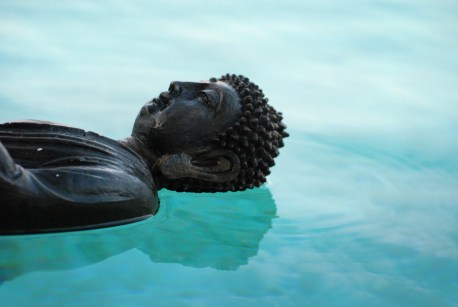
lying buddha.jpeg

Over the years I have heard some people say things such as ‘the Buddha was enlightened, but he was not self-realised’ or ‘the Buddha only had an insight into no-self, but he never discovered the Self’. Both of these imply somehow that the Self-Realisation of the Upanishads is somehow of higher status and fundamentally different to the Nirvana of the Buddha, and that the Buddha was not truly enlightened.

I have noticed that usually this view is put forwards either by academics who have analysed various texts but not fully embraced the traditions, or by religious teachers who teach that their way is the best or only way and tend to be attached to their methodology over and above others.

I remember that when I first came across this view I was quite shocked, as it always seemed obvious to me that both Buddhist and Vedic traditions were pointing at the same things in different ways. In fact all the great self-realised masters I had come across also said the same. Impurities naturally, and perhaps inevitably, creep into traditions as without a genuine realisation, the ego co-opts the teachings and slowly slowly dogma and beliefs form. Therefore teachings naturally reinvent themselves in each culture and age, and we can clearly see this if we study the history of the development of both Vedanta and Buddhism. In fact, there has been so much cross-fertilisation between these two traditions, with each tradition borrowing from the  others at some point, it is sometimes difficult to tell them apart!

The key thing for me is to realise that there exist various different methods by which the Supreme is approached. And, of course, some say there are no methods (you could say this is the method of directly pointing out what is already fully here). When the method has served its purpose, then why cling to the method? The main issue is for ignorance to be removed, and the various teachings serve various ways of doing this:

There is nothing to realise. There is nothing new to gain…On the other hand a man must lose his ignorance. That is all.

Ramana Maharshi, Talks 104

By the way, in the above quote, I assume that by ‘man’, he means any human. Here is what Ramana said about the Buddha and Self-Realisation:

Ramana Maharshi, according to verse 568 of the Sri Ramana Paravidyopanishad, states that the Buddha’s Nirvana is the same as the Self-Realisation that Ramana speaks of:

568. Guru [Ramana] has said that the state of nirvana that was taught by Buddha to be the state in which samsara and suffering are ended is the same as remaining in the supreme state, having discarded all the sheaths.

He reaffirms this in the following verses:

345. The sage Buddha taught this truth; also the great teacher Sankara taught the same; our own Guru [Ramana] also tells us the same; and this is also the essence of the Vedanta.

284. The Buddhas call that the state of right awareness. In it there is neither knowledge nor ignorance. That is the highest state, in which there is nothing, whether sentient or insentient, other than the Self.

So, there you have it: according to Ramana Maharshi, Nirvana = Self-Realization. Here is another quote of Ramana on Buddha taken from the book Maharshi’s Gospel:

Question: Buddha is said to have ignored questions about God.
Ramana Maharshi: Yes, and because of this he has been called an agnostic or nihilist. In fact Buddha was concerned with guiding the seeker to realise Bliss here and now, rather than with academic discussions about God and so forth.

So that’s Ramana’s view. What do you think?

Here is a more in depth post that looks at this: Self-enquiry and Buddhism/ the Jhanas and Ramana Maharshi 


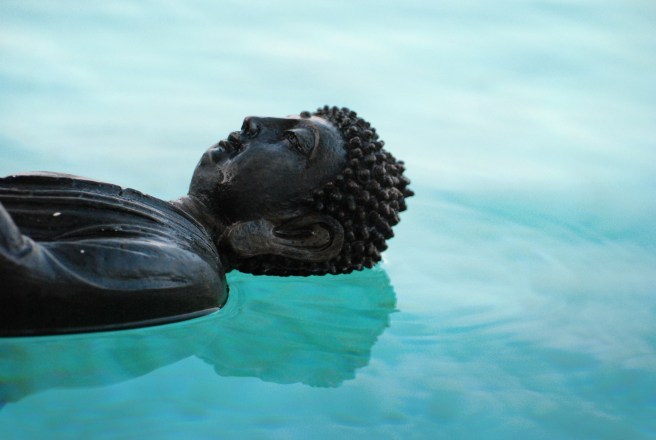
lying buddha.jpeg

ROBERT ADAMS ON DEVOTION


robert adams ramana maharshi

“YOU HAVE TO PUT GOD FIRST.” This is why people like Ramana Maharshi always said that devotion, faith and self-inquiry are the same thing. You can’t just have dry self-inquiry. You have to feel love. You have to feel devotion. You have to put God first. Unless you put God first you’re going to just have dry words, and the words will give you a sharp intellect. You will be able to recite all sorts of things, memorize books, hear lectures and remember them, yet you will never really awaken.

This is why sometimes Advaita Vedanta can be dangerous to some people. Yet if they really read the books on Advaita Vedanta, they’ll understand that they have to develop a tremendous faith.

Think of some of the teachers that you know or heard about. Nisargadatta, he always prayed. He realized that he was consciousness. He was self-realized, but at the same time he chanted, he prayed, he had devotion. It sounds like a contradiction. For you may say “If someone is self-realized and he knows himself or herself to be all there is, to whom do they pray?“

Try to remember that all spiritual life is a contradiction. It’s a contradiction because words cannot explain it. Even when you are the self, you can pray to the self, which is you.

Ramana Maharshi always had chanting at the ashram, prayers, devotional hymns. These things are very important. Many westerners, who profess to be atheists, come to listen to lectures on Advaita Vedanta, and yet nothing ever happens in their lives. As long as you do not have devotion, faith, love, discrimination, dispassion, it will be very difficult to awaken.

Therefore those of you who become bored with practicing self-inquiry may become very devotional. Surrender everything. Give up your body, your thoughts, all the things that bind you, whatever problems you may believe you have. Surrender them to your favorite deity. You are emptying yourself out as you do this. Do a lot of it. Become humble. Have a tremendous humility.

If you can just do that you will become a favorite of God and you’ll not have to search any longer.

~Robert Adams

Some fundamentals of the path

meditation advaita om self-realisation

Rest for a while.
Allow your heart and feelings to lead you:

Gently,
Sink into your heart,
And be still.

Let that Silence overpower you,
Let that Presence stir and move you,
Both inwardly and outwardly,
Guiding your words, thoughts and actions,
Bringing you back to ever-present Stillness.

Know that Stillness as your Essential Being,
And be happy and well.

Let devotion, prayer and gratitude,
Naturally well up as they please,
Purifying the Heart-Mind.
Cleansing the system.

All experiences come and go,
And occur within the depths of awareness,
Which in itself in-essence remains ever-unchanged and unharmed,
Like the screen and the movie projected onto it.

Grounded in the firm knowledge of awareness,
There is no need to hold anything back.

These are some fundamentals of the path.

Do real gurus use Facebook, Instagram, Twitter, have websites and advertise?

mike myers true guru

There is a notion going around some spiritual circles that ‘real gurus’ don’t advertise: they don’t have websites; they don’t go on Facebook or Twitter; and they definitely don’t have a blog. Of course, many genuinely awakened people don’t do any of these things – but the same could be said the the un-awakened too. ‘Real gurus’, apparently, sit around all day wearing nothing but a loin cloth, always speak in profound dolcit tones, and have a nice long wispy beard. Gotta have the beard.

Let me ask you, is life so limited? Is it really such a transgression to want to share something you’ve found? Listening to some people it does seem that way. I make no qualms about the fact that I do advertise, that there is a desire to reach out to others to share this wonderful discovery that I call Freedom. It’s not as if I try to hide it! And many people who have found ‘my teachings’ have benefitted from my sharing – not that I take any personal credit for any of this.

There is a natural desire to want to share what I have found. I don’t think this has to be the way it is for everyone, but it does seem to be the way it is over here in this body-mind called Tom. It doesn’t mean I’m not sharing something genuine. It doesn’t mean my realisation is only half-baked. It certainly doesn’t mean that I’m only in it for the money. If one day the desire to share this teaching stopped, and who knows, it might one day, then that would be fine too. For now, I’ll just keep on going. Why? Because that’s what’s happening.

Ramana Maharshi

ramana maharshi

Let’s look at a good example where the myth of not advertising comes from – the example of Ramana Maharshi. Now, many of you know that I have a deep resonance with his teachings and that a sense of devotion towards him spontaneously arose in me quite unexpectedly towards the end of my seeking journey. So I mean no offense at all when I use him as an example. Ramana Maharshi primarily taught in silence and wasn’t obviously/outwardly trying to share any teaching to the masses in an evangelical kind of way. Ramana didn’t travel around the world or even around India – he never really left the mountain of Arunachala once he got there as a teenager, and when he wasn’t being silent, he sometimes talked about the power of silence. Here is an example:

‘Silence of a realised being is most powerful. He sends out waves of spiritual influence which draw many people towards him. Yet he may sit in a cave and maintain complete silence. He never needs to go out among the public. If necessary he can use others as his instrument.’

Here is another example, again from Ramana Maharshi:

‘Contact with an enlightened sage is good. They will work through silence. By speaking their power is reduced. Silence is most powerful. Speech is always less powerful than silence…’

So there we have it. One of the most revered enlightened sages of modern times has said it clear as day. We can therefore deduce that if you’re on Facebook, you’re definitely not realised…right? Well not quite. Let’s take a look.

Shankara

Shankara shankaracharya

If we take the example of Shankara, a giant of Vedic spirituality and considered to be the founder of Advaita Vedanta, we have a very different character outwardly. Shankara fervently travelled the length and breadth of 8th century India preaching and debating those who disagreed with him, setting up schools all across the subcontinent and advertising how his teachings were better and superior to those around him.

Interestingly Ramana Maharshi clearly considered Shankara to be somebody who was fully awakened or self-realised, and yet Shankara clearly went out ‘among the public’. Ramana translated several of Shankara’s works from Sanskrit into Tamil for the benefit of his devotees who were unable to read Sanskrit and described how Shankara’s teachings could lead to liberation. In Ramana’s translation of Shankara’s vivekachudamai, Ramana says of Shankara ‘Sri Sankara, guru of the world (jagathguru), shines as the form of Lord Shiva‘. A worthy complement indeed.

And yet this was a person who certainly did not just stay quiet or stay silent, and he definitely did go out into the public, contrary to the quotes from Ramana Maharshi above. What can we make of this apparent contradiction?

Nisargadatta Maharaj and his lineage

nisargadatta_maharaj

Lets take another example – that of Nisargadatta Maharaj, another revered sage from the 20th centuty. Whilst he did travel widely prior to his awakening, and a small amount afterwards too, he taught mainly from a room in a noisy street in Bombay. As far as I’m aware he didn’t really advertise much himself, but like Ramana, he permitted books about his teachings to be written and sold. So in this way, Nisargadatta would fit the model of a guru who did not solicit disciples and did not, overtly at least, go out to spread the word in public.

However, interestingly, Nisargadatta’s guru, Siddharameshwar Maharaj, travelled extensively around the state of Maharastra teaching those who came to him, sharing his teachings ‘out in the world’. He actively travelled around this part of India sharing his teahings with anyone who resonated with or who would listen to what he was saying.

In Nisargadatta’s lineage, they also teach using texts from Shankara. In verse 38 of Shankara’s Vivekachudamani it is written:

It is the very nature of the great souls to move of their own accord towards removing other’s troubles’

And in verse 37:

They themselves have crossed the dreadful ocean of the world. Without any selfish motive they help others to cross.

One of Ramana Maharshi’s favourite books is a Tamil  Advaita classic called Kaivalya Navaneeta, or the Cream of Liberation. In verses 34 and 35 this is written:

I have already told you that the sages, liberated while alive, appear to be active in many ways according to their parabdha*. My good boy, hear me further, the activities of the sage are solely for the uplift of the world. He does not stand to lose or gain anything. 

*Parabdha, refers to parabdha karma, which means the results of past actions that have not yet manifested. ie. the playing out of conditioning, or, if you want, destiny.

Samarth Ramdas

Dasbodh

Sri Samarth Ramdas is one of the leading figures in Nisargadatta’s lineage from the 17th century. His written text Dasbodh became one of the main texts, perhaps the main text in Nisargadatta’s lineage. There is a story of Samarth Ramdas meeting Guru Hargobind, the sixth of the ten Sikh gurus. It goes like this:

Samarth Ramdas questions Guru Hargobind about his expensive attire, comparing him to the more austere Guru Nanak: “Guru Nanak was a Tyagi sadhu – a saint who had renounced the world. You are wearing arms and keeping an army and horses. You allow yourself to be addressed as Sacha Patshah, the True King. What sort of a sadhu are you?”
Guru Hargobind replied, “Internally a hermit, and externally a prince. Arms mean protection to the poor and destruction of the tyrant. Baba Nanak had not renounced the world but had renounced Maya, i.e. ego”
Ramdas responded by stating: “This appeals to my mind”.

Guru Hargobind here was teaching Ramdas that what is important is not the outward appearance, but the inward state of mind. Some saints are renunciates, like Guru Nanak, others are more ‘worldly’, at least in outward appearance. This is just the way it is. There is no choice in the matter.

Ramdas subsequently went on to do many things out in the world, contrary to what Ramana says in his statement above. Ramdas started to go out and gather many people around him in order to counter the recent Islamic teachings that had spread into India and convince people of the superiority of the Vedic traditions. He built temples, schools and even statues to promote his cause. In fact much of Ramdas’s magnum opus, Dasbodh, is about living in and dealing with the real world. Ramdas was also quite political, actively opposing the caste system, promoting women’s rights in both spiritual and non-spiritual arenas, recruiting female disciples and also backing a Hindu king to overthrow a Muslim one.

In start contrast to Ramana’s silent power, Ramdas said that sages who sat in one place were lesser saints than the ones who engaged in the world. Also in stark contrast to Ramana, Ramdas said that when he died it would be his books, ie. his words, that would carry the teachings forwards and these words should be cherished.

What a contrast! Here we have a silent sage promoting silence, and an active politically-inclined one promoting activity! What can we make of this?

Other examples in brief

I could go on: King Janaka is often given as an example of an enlightened sage who is wealthy and of the world. Vidyaranya, who wrote Pancadasi, a staple text in the Shankara’s Advaita Vedanta tradition, was very active politically and was political advisor to several kings of the day. More recently Swami Vivekananda and Swami Chinmayananda both set up ‘missions’ to spread the word and both travelled and advertised widely in order to do this.

Conclusion

I hope to any discerning reader, even without citing all these examples, it should be obvious that there is nothing intrinsically wrong with advertising, having a website or even, god-forbid, ‘tweeting’. These activities don’t automatically mean you are an ‘unenlightened’ waste of space. What is important is the purity of motivation and genuineness of insight-realisation. We don’t have to just believe what Ramana or Ramdas said, but we can think and see the reality of it all for ourselves.

As Guru Hargobind said, it is not about renouncing the world, but renouncing the ego. By this I mean seeing through the illusion of believing yourself to be a separate doer entity that authors its thoughts and actions (ie. insight), and the removal of the compulsive habitual tendencies (vasanas) that stem from that false belief (ie. purification).

I’ll leave you with a traditional description of an enlightened sage. It describes how a sage may be silent, but also may be active ‘like a python attacking its prey’! The point is that the unique conditioning of the purified body-mind of a ‘sage’ plays itself out in unique and often varied ways. Again we are quoting from Shankara’s Vivekachudamani, starting at verse 536 (apologies for the male chauvinist language assuming the sage is a ‘he’):

The enlightened sage (the knower of Brahman)…if people provide him with comforts and luxuries, he enjoys them and plays with them  like a child. He bears no outward mark of a holy man…He may wear costly clothing or none…He may seem like a madman or like a child, or sometimes like an unclean spirit…Sometimes he appears to be a fool, sometimes a wiseman…Sometimes he is calm and silent. Sometimes he draws people to him, as a python attacks its prey. Sometimes people honor him greatly, sometimes they insult him. Sometimes they ignore him…He acts, yet is not bound by his action. He reaps the fruit of past actions, yet is unaffected by them.

❤ ❤ ❤


Relax into Unknowing/Faith in Being

Sink back and relax into Unknowing

Relax into Unknowing
What does that mean?
It means to relax, to let go of everything.

What are you left with?
You are left with whatever is.
You are left with this,
Just this.

No matter how much you let go,
This is.

Or you could say:
No matter how much you let go,
You are.

This Letting Go,
Is the coming into contact with being.
This is what it means to abide as the ‘I am’.
This is what it means to ‘remember who you are’.

It’s can become obvious that
All perceived things,
All phenomena,
Come and go.

The objects of the external world come and go,
Thoughts come and go,
Feelings come and go.

Knowledge comes and goes,
Expericences come and go,
States of consciousness come and go.

The body is a process
Of constant change,
As is everything else.
It too comes and goes.

In this sense independent objects do not exist in of themselves.
All there is is movement,
Constant movement appearing as form,
But no static unchanging form can be found
Not even for a moment.

This Being/Unknowing is always here.
It can be consciously known when you relax and notice it,
Notice that which is ever present and unchanging in your experience.

When this unchanging essence/being is realised
And understood to always be here,
Undisturbed by comings and goings,
Then we do not need to keep on returning
to the practice of relaxing into unknowing/being.

Instead we can have Faith In Being.
This is Self-Knowledge.

Poetry: O! Murderous Heart!

cropped-sunset-trees1.jpg
Allow the mind to sink,
down down down,
down into the Heart.

Allow the mind to rest,
allow the thoughts to still,
and allow the Joy and Bliss,
(which is none other than the purifying Heart itself)
to well up.

Allow this to happen,
quite naturally,
unforced,
and paradoxically with no expectation.

The mind quietens,
and temporarily,
the self-centred egoic process does not exist.

With repeated cessation of the mind,
the self-image-centred ego is submerged,
then through time it is weakened,
and eventually it is consumed by the Gracious Heart.

Then all is left is Purity,
just Purity Purity Purity;
the resplendent Heart,
Bounteous,
Over-spilling with Joy.

The Energy,
seemingly boundless,
everywhere and everything…

…How can you speak of this?

My words are uttered in poetry,
not prose,
destined two fall upon the attentive ears
of one who has already discovered
the intoxication of the Self.

O! Murderous Heart!
You have smothered me,
Warmly and tenderly,
In the heat of your Love,
Where am I to be found?!

O!Words cannot describe Your wonder,
Your effulgence,
Your light,
Your love…

…words fill me with glory
Yours and Mine;
our glory is but One Glory:
it is Me,
and it has nothing to do with me;
it is Mine,
and yet it is not mine;
it is here,
but it is no particular thing;
it is everything,
but not even everything.

Yes…words cannot touch this,
yet these words spew forth,
like an idiot talking to a drunkard,
somehow it all makes perfect sense.