Practicing knowledge

This is continued from a previous post Problems with utilising conceptual tools:

Practicing knowledge

This brings us to the idea of practicing knowledge. Just to be clear, the knowledge we are talking of here is in the form of concepts, as described previously above. In this case whenever we notice ourselves suffering, we notice it is because we have identified as being the doer/body-mind. We then take up the sword of knowledge ‘I am not the body’ and use it to slay the ignorance ‘I am the body’.

Other similar ideas are concepts of identifying as being the witness or identifying as consciousness or considering the world and body-mind to be an illusion. These concepts all which work in a similar way to negate the identification as the doer/body-mind. Here’s an example from Yoga Vasisthta:

You are bound firmly on all sides by the idea, I am the body’. Cut that bond by the sword of knowledge ‘I am Consciousness’ and be happy.
Yoga Vasisthta

Whenever ignorance rises, we cut it down. When it doesn’t rise, we can leave it alone. Initially we may have to repeat the phrase ‘I am not the body’ or ‘I am Consciousness’ or ‘I am Brahman’ in our heads repeatedly, like a mantra, until it sinks in, but after sometime it is ingrained into us and we only unsheathe the sword when it is required.

To be continued in a future post: Discarding knowledge as ignorance

Problems with utilising conceptual tools

Continued from 2 previous posts:

  1. Why seeing/understanding alone may not be enough
  2. Integrating the understanding of no-doer

Problems with utilising conceptual tools

Generally speaking, the more you believe in the concept, the better it works, but conversely the harder it is to throw it away once the task at hand (rooting out the ego/’I am the body’ notion) has been completed.

Other problems with believing in the concepts is that it sets you against other traditions and teachings that either utilise other concepts, thus breeding division and sectarianism, and also it can lead to some unintended consequences, some of which can be quite unpleasant.

These include spiritual bypassing, which is where emotional and psychological issues are not dealt with properly as ‘I am not the body-mind so I have no issues’ or where the body is neglected and not properly respected as it is deemed to be ‘insentient, inert and not me’.

Another problem with utilising concepts is that the ego is perpetuated and can even be strengthened during this part of the teaching. Eventually it can be seen that all teachings are also subtle ways of continuing/perpetuating the egoic process which is itself based on the illusion of being a separate doer-entity. Until then, these conceptual teachings and practices based upon these concepts may be useful, but eventually we see that all teachings are potential obstacles. Why? Because Freedom is already fully present, and on a subtle level all teachings assume that Freedom is not already here and reinforce the notion that this moment is deficient in some way.

You can probably think of other negatives of this approach yourself, and perhaps have seen spiritual seekers on this journey fall into one of these traps.

To be continued in a future post: Practicing knowledge

Integrating the understanding of no-doer

This post follows on from my previous post: Why seeing/understanding alone may not be enough

This understanding of no doer may initially take time to become embedded, and you may have to ‘practice’ it to start with. It’s just like many other forms of knowledge:

Take the example of a child learning his (or her) name. At first he doesn’t know his name. Upon his parents repeating his name to him multiple times, he finally starts to realise that his name is ‘Tom’. Maybe at first he forgets his name a few times and doesn’t respond when someone calls him. After sometime it becomes ingrained and embedded into his mind and he no longer has to think about it.

Eventually he can’t help but know his name. When someone calls out ‘Tom’, he automatically knows someone is calling him, whether he  like it or not.

It’s the same with the understanding ‘there is no doer’. Initially the understanding may be a bit shaky, but after sometime, after repeated practice, after going through the logic behind it a few times and seeing the truth of it, it becomes more ingrained. Eventually it becomes effortless as knowing your name.

To be continued in my next post: Problems with utilising conceptual tools

Why seeing/understanding alone may not be enough

This post follows on from my previous 3 posts relating to the body:

  1. Do you know for certain that you are the body?
  2. Are you or are you not the body?
  3. Why does understanding the body matter?

Seeing this is not always enough

However, for many people simply seeing there is no doer is not enough. Why? Well we have lived our lives for many years with the deeply ingrained belief that we are doers, with the belief that we are the creator of our thoughts and instigators of our actions. This habitual belief is not so easily washed away, and even when seen, it can continue to operate and cause us to suffer.

In vedanta a common methodology used to counteract this is to utilise a concept that opposes and counteracts the ignorance:

‘I am not the body’ is a tool by which one can weed out the ‘I am the body’ notion.

Practice of the knowledge ‘I am not the body’ is a conceptual tool by which one can weed out the belief in ‘I am the body’ concept.

Note that ‘I am not the body’ is a concept. If believed in, ie. if considered to be genuinely true, it would be a belief. You do not have to believe a concept is true in order to benefit from it. You can use the concept either way, whether you believe in it or not.

To be continued in my next post: Integrating the understanding of no-doer

Are you or are you not the body?

This follows on from my previous post.

It is an observable fact that our direct experience alone does not provide us with sufficient evidence to say whether or not objects in the world arise solely from consciousness (ie. philosophical idealism), or whether consciousness is a product of the material word (eg. the human brain) which in turn perceives an image of that material world (ie. philosophical realism).

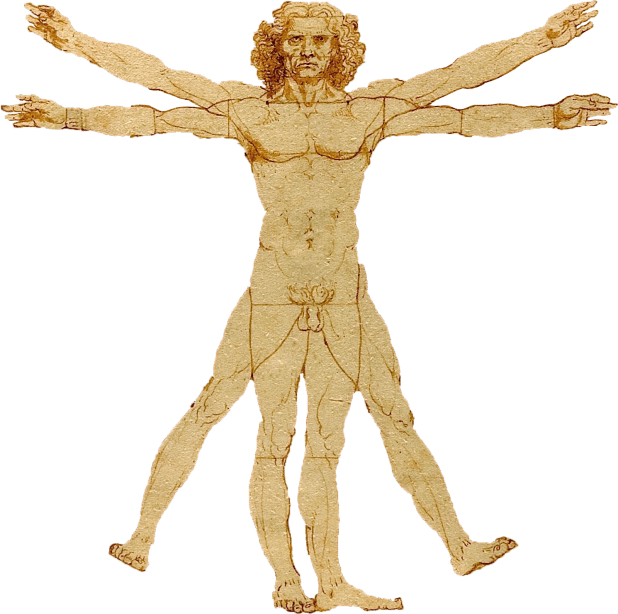
Portale_Leonardo_da_Vinci.png

Not that these are the only two possibilities – there other theories that could also account for our present experience, and perhaps other explanations that our limited human minds are incapable of understanding – but for the purposes of this article we will not go into this.

The point is, from our direct experience alone, we do not know if what we call the body is solely an image that arises in our consciousness, or if that image is a representation of a real body somewhere outside our consciousness which in turn gives rise to consciousness.

To be continued here: Why does understanding the body matter?

Do you know for certain that you are the body?

Sculpture Male Body Naked Gestures Man Human
Do you know for certain that you are the body?
Do you know for certain that you are not the body?
The honest answer to both these questions is ‘no’.
‘I am not the body’ is a tool by which one can weed out the ‘I am the body’ notion.
Then once the work is done, like the thorn used to remove a thorn, throw them both away.
What is reality then?
Reality is simply whatever is left over when concepts of self and no-self are no longer believed in.
Reality is the ineffable indescribable indefinable ever-obvious ever-present ‘now’.
Tom Das

These verses will be elucidated further in upcoming posts:

  1. Are you or are you not the body?
  2. Why does understanding the body matter?
  3. Why seeing/understanding alone may not be enough
  4. Integrating the understanding of no-doer
  5. Problems with utilising conceptual tools
  6. Practising Knowledge
  7. Discarding knowledge as ignorance
  8. Integrating knowledge/spontaneous action
  9. Am I the body?

The sense of being a doer vs. no doer

When the doer* is seen to be an illusion, an imagined fiction, the sense/feeling of being a doer may still continue. The sense/feeling of being a doer can arise like any other phenomena arises.

And notice – it arises spontaneously, meaning there is no doer there doing it. You see! It can be seen that even the sense of being a doer is something that has no doer behind it – it just happens, by itself.

So, in my daily life I often feel like I’m doing things, but there is an understanding there that there is no doer-entity doing it. It is all just happening.

This is the difference between experience and knowledge/understanding: I may feel like a doer, but I know/understand I am not a doer.

It is similar to realising the sun does not orbit a stationary earth, even though the appearance of the sun rising and setting each day continues. Or if you realise that a mirage is an illusion, the illusion persists even when not believed in. The sense of doership can continue even when the understanding ‘there is no evidence for a doer’ is present.

*By doer I mean the notion of being a separate entity which creates or authors thoughts and actions

Creating then resolving the duality of awareness vs objects in awareness

The following are adapted from recent Facebooks posts of mine
http://www.facebook.com/tomdas.nd

The body-mind entity can accept, reject or be indifferent to things. This is relative acceptance and is an action that can be performed. Awareness is all-accepting, always embracing ‘what is’. This is total/absolute acceptance and is not something that you can do, but something that can be recognised as already being here.


Awareness cannot accept or reject anything, as it does nothing. It just is: present and aware. All actions occur at the level of the body and mind (and world).

Awareness could be said to unconditonally/choicelessly ‘accept’ everything that occurs within it, in the same way a mirror ‘choicelessly accepts’ the reflection within it.

…but actually, as this example illustrates, the mirror-like awareness is not actually doing anything apart from ‘being itself’.


In the way I speak about this, awareness cannot identify with anything. It is only the mind that identifies with/as the mind.

Or to put it differently, thought imagines it’s a thinker and believes itself.

Awareness is ever-free, just like the mirror in the example above


Through identifying with choiceless awareness/consciousness for sometime, the ego/doer is seen through and no longer identified with. Then the identification as being choiceless awareness/consciousness also can be dropped.

What we are left with is ‘just this’: simple, direct, beyond words. This is the ‘realm beyond verbal teachings’.
Here the apparent duality conceptualised by differentiating (viveka) between that-which-changes (objects) and that which doesn’t change in our experience (the subject, I) is resolved into non-duality.

Non-duality meetings in London

A GENUINE REALISATION OF FREEDOM IN ORDINARY EVERYDAY LIFE

ND London

The course of structured teachings I’ve been teaching recently are due to restart this Thursday 7pm in Kingston, London, and the following week online.

As both a parent and a working doctor, my teachings are geared towards a genuine realisation of Freedom in everyday ordinary life.

It seems there are lots of conflicting teachings out there which can add to the confusion for a seeker of truth: are practices required? Is there anything you can do to help ‘get this’? Does the ego disappear? What happens when we die? Is there really ‘nobody here’? What about self-inquiry? The structured teachings, over the next few weeks, aim to address all these apparently contradictory points and more…

While this really can’t be put into words, concepts and practices can apparently help us along the way. Sometimes. It seems that some teachings are more effective than others, depending on ‘where the seeker is’.

The result? Seeing the Freedom that already is.

For more details see http://meetu.ps/e/.nwhrrlywdbmb/1GbHK/d or tomdas.com/events

A complete teaching: Relax. Listen to the beat of the drum.

water-drop

Relax.

Listen to the beat of the drum.

There’s no-one here!

Tom Das

This pithy statement actually encapsulates the entire teaching. How? Let me explain:

Relax…

This refers to generating peace, and relaxation primarily of the mind. Like a dense fog clearing in the heat of the morning sun, allowing the mind to calm and thoughts to lessen gives rise to the conditions in which clarity of seeing-understanding can arise.

As we practice being peaceful, we naturally become happier: a warmth in our heart naturally blossoms as our addictive pleasure-seeking desires weaken and fade. We learn to be happy where we are, and then we pass beyond the need for the body-mind to even be happy or at peace. Gradually compulsive desires fall away and we no longer suffer if we do not receive what we want. Our compulsive desires fade, and only preferences remain.

Listen…

This refers to the insight part of the teaching, the essence of the teaching. It is clear seeing-understanding. As the morning fog clears, things can be seen for what they are, as they are, brightly illuminated by the sun of knowledge/insight/understanding.

…to the beat of the drum.

What do we listen to? What are we looking at? The drum can represent the body-mind entity, an object in the world, or just a simple drum. The point is to see things as they are. As the drum beats, we can watch it, hear it, follow its mechanism.

We can see how there is nobody inside the drum making a noise. We can see how the sound is an automatic  reflexive response when the skin is struck with the striking implement. We can see how the drum is empty, and the resonance within the empty space (full of air) creates the reverberating sound.

We can see how this is true of all things, how all things act and function without there being a separate doer-entity that initiates and creates its actions. Rather there is a natural spontaneously self-expressing interdependence and non-separation.

There’s no-one here!

Like the drum, we are essentially empty, meaning there is no trace whatsoever of a separate individual doer/self. This is the essential realisation of freedom.

It is not that the appearance of the body-mind goes or changes, or that you lose the experiential perspective of being a particular body-mind. No. Perception from the apparent perspective of the body-mind remains.

The term ‘no-one’ refers specifically to no-doer. It is the seeing that there never was a separate doer-entity. It is seeing that this doer was created by thought, it was imagined by thought and believed to exist by thought.

A summary

Through generating peace (Relax…) the grip of thought was loosened, through observing (Listen…) things were examined with the intention of seeing things (…the drum…) as they are. Comparing what is seen against the content of our thoughts, it is revealed that the concept of doership does not accurately reflect the reality of what is perceived: there is no doer.

The concept of doership has been operating for so long within most of us. It is this concept that causes our suffering. The understanding that there is no-doer can then act to root out the concept of doership and remove suffering.

What we are left with is what was always here: this. It doesn’t have to be named, you don’t have to put it in words, you don’t have to carve it up using the knife of concepts (although you can if you want). It’s just whatever’s happening, spontaneously arising, however it arises.

This.