Non-duality
Unknowing

All I know is I don’t know.
I don’t even know what doesn’t know.
Just all this,
Happening by itself:
No knowledge of a knower,
And never understanding any of it.
Mystery is an apt label,
For this unknowing.
It’s too ordinary to notice

It’s too ordinary for you to notice.
Whenever you’re seeking,
Whatever you’re seeking,
You’re seeking something else,
A mental projection,
A fantasy.
The self that causes all the mischief,
All the suffering,
Is an imagined entity.
It is seeking its own end
– how absurd!
No-self is already here.
To notice this,
There is nothing that you need to notice,
(Nothing you need to do)
As it is always being noticed.
It is simply the totality of whatever is already being perceived,
And in that totality there has never actually ever been a perceiver,
The perceiver being an imagined entity.
Ask yourself “Who am I?”,
“What is the I”,
And you will find no “I” there,
“I” being just an empty thought.
Reality is simply that which remains
When no actual “I” is seen,
When things are seen as they are,
Which is always the case.
There is nothing you need to do,
Nothing to realise,
Only cease adding the notion of “I”,
Only cease to believe in that “I” for which there is no evidence.
Then the notion of “I” can still appear,
The “I” can still come and go as it pleases,
(for this “I” is just a thought,
and like all phenomena,
its appearance cannot be controlled,
spontaneously appearing and disappearing by itself)
But it is no longer believed in.
The “I” being seen through,
Reality shines by itself,
As it has always done.
This is nothing new,
I hesitate to say nothing special,
As it is also truly wonderful.
Reality being everywhere and ever-present
– what is more ordinary and commonplace than that?
Tao Te Ching: Mastery of the world
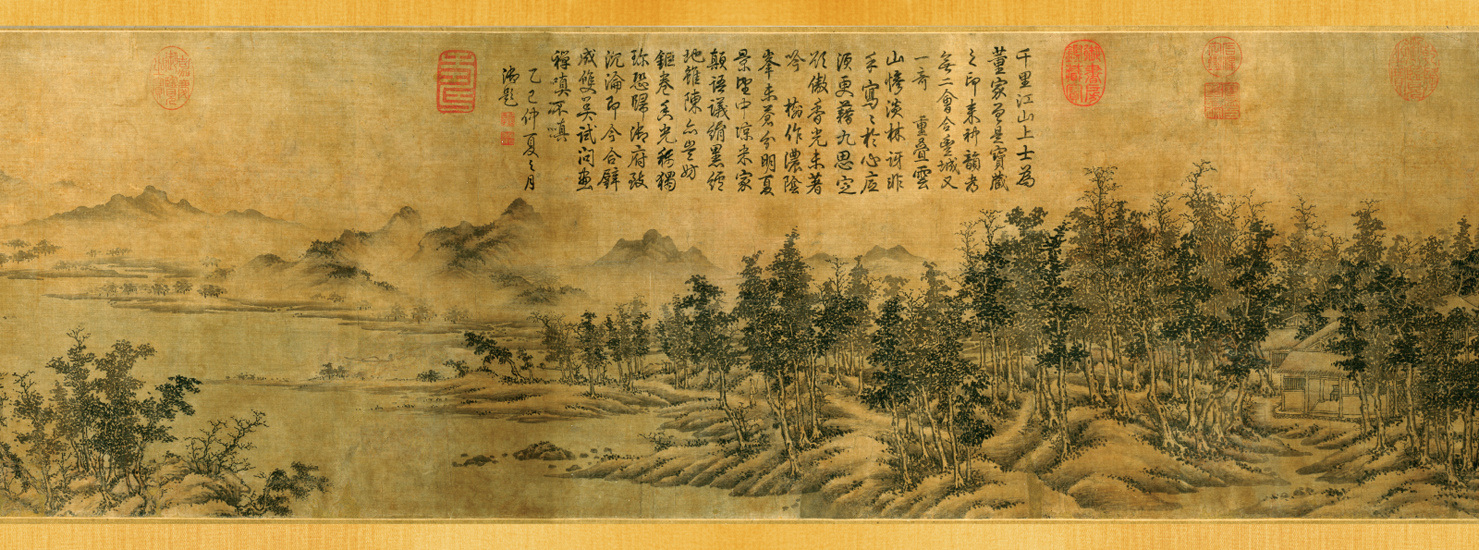
This is one of my favourite verses from the Tao Te Ching, an ancient Chinese text overflowing with wisdom (If you have not read it, I highly recommend you do – it is easy to find a translation online).
Here in this verse we are instructed to let go, let go and let go again, until not even the notion of our very self remains. Here we have let go of all ideas of spiritual practice, of spiritual paths and of even letting go.
Then, perhaps, non-action will ‘happen’. This is the culmination of the so-called spiritual path: no-doer, nothing more remains to be done, nothing remaining undone – this is ‘mastery of the world’.
One who seeks knowledge,
learns something new everyday.
One who seeks the Tao,
unlearns something new everyday.
Less and less remains,
until you arrive at non-action.
When you arrive at non-action,
nothing will be left undone.*
Mastery of the world is achieved,
by letting things take their natural course.
You can not master the world,
by changing the natural way.
Tao Te Ching verse 48
*An alternative translation is:
‘When there is no doer,
nothing remains to be done’
Insight

Insight is not personal insight.
With personal insight, you have an insight,
You realise this or that,
You realise x, y or z.
All personal insight is based on concepts or thought,
– they are all subject to change,
– they are all subject to doubt.
With Insight it is the person that is seen through;
Insight is there without a person having an insight:
Everything is just Insight,
There is only Insight.
Like realising the lake is a mirage:
Your personal insights and doubts were just ripples on its surface;
Then the whole of spirituality is done for,
No need for any of it anymore,
What else is there to do?
What can be done when there is no doer?
Sensations, fresh and clear

Everything appears fresh,
Fresh, crisp and clear;
A sparkling mirror,
everything perfectly reflected.
Body, mind and senses function by themselves,
As they have always done,
Light! Sensations! Movement!
Is reality impersonal?

This is a question that often comes up, and many teachers often state that reality is impersonal. I myself have written a piece stating just this (complete with an impersonal looking image). However, like so many things we can write and say about reality, it is often correct in one way but false in another. As I’ve stated many times before, reality cannot be captured in words.
We could say that reality is impersonal or both personal and impersonal, or we could say that it is neither personal or impersonal. All these statements would be correct in the correct context.
But are these statements helpful? To say that reality is either personal or impersonal is ultimately besides the point. The essential point is to see things as they are, or rather to stop believing in all our concepts about reality – then reality shines, as it always has done. Who cares if it’s personal or impersonal?
The Sun and the Moon
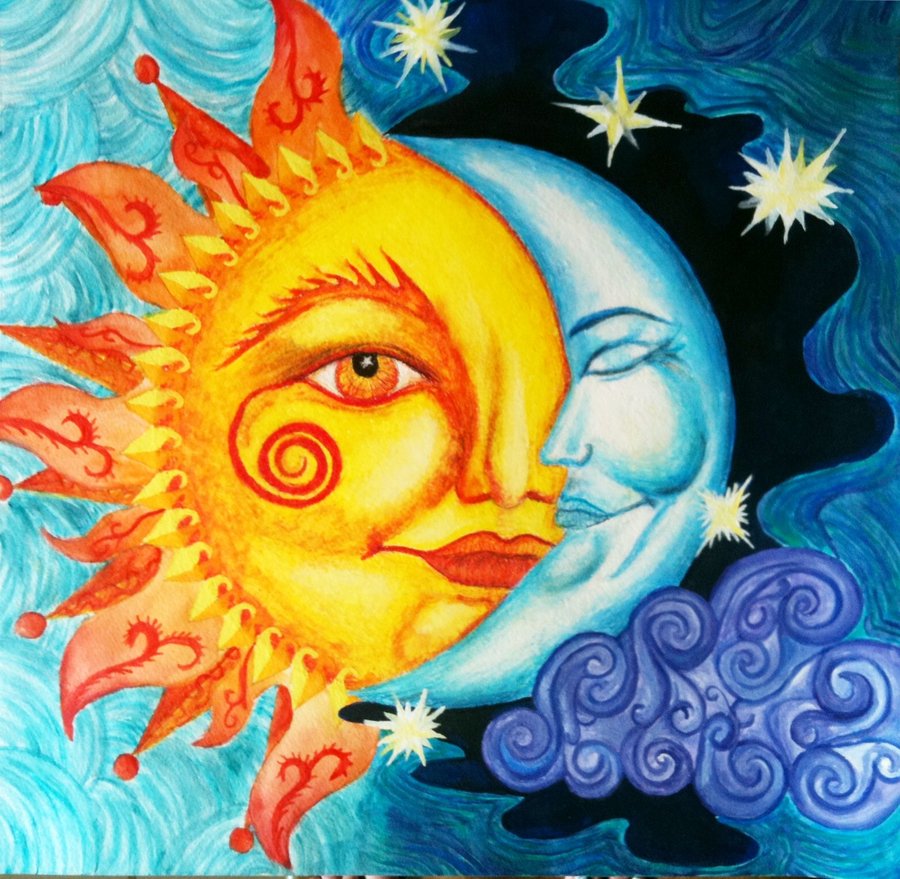
The sun
Bright, bold, clear, unchanging,
The masculine principle.
The moon,
Mysterious, shape-shifting, temperamental,
The feminine principle. Continue reading
Sufi mystic Abol-Hasan speaks
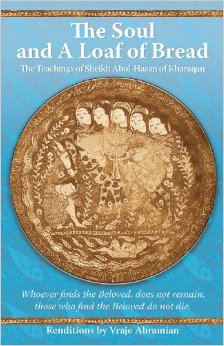
Here are some gems from Sheikh Abol-Hasan, a Sufi mystic from the 11th century AD. His words continue to astound me. I have followed each quote with my commentary in italics and hope this does not detract from the quotes themselves.
One may speak of those absent,
but one who is Ever Present,
one can say nothing of
Sheikh Abol-Hasan, saying 92
How can we speak of Him? How can we talk of Him? All talk of Him is fanciful, all the more so if we take our descriptions and theories about Him seriously. Continue reading
Jesus and non-duality
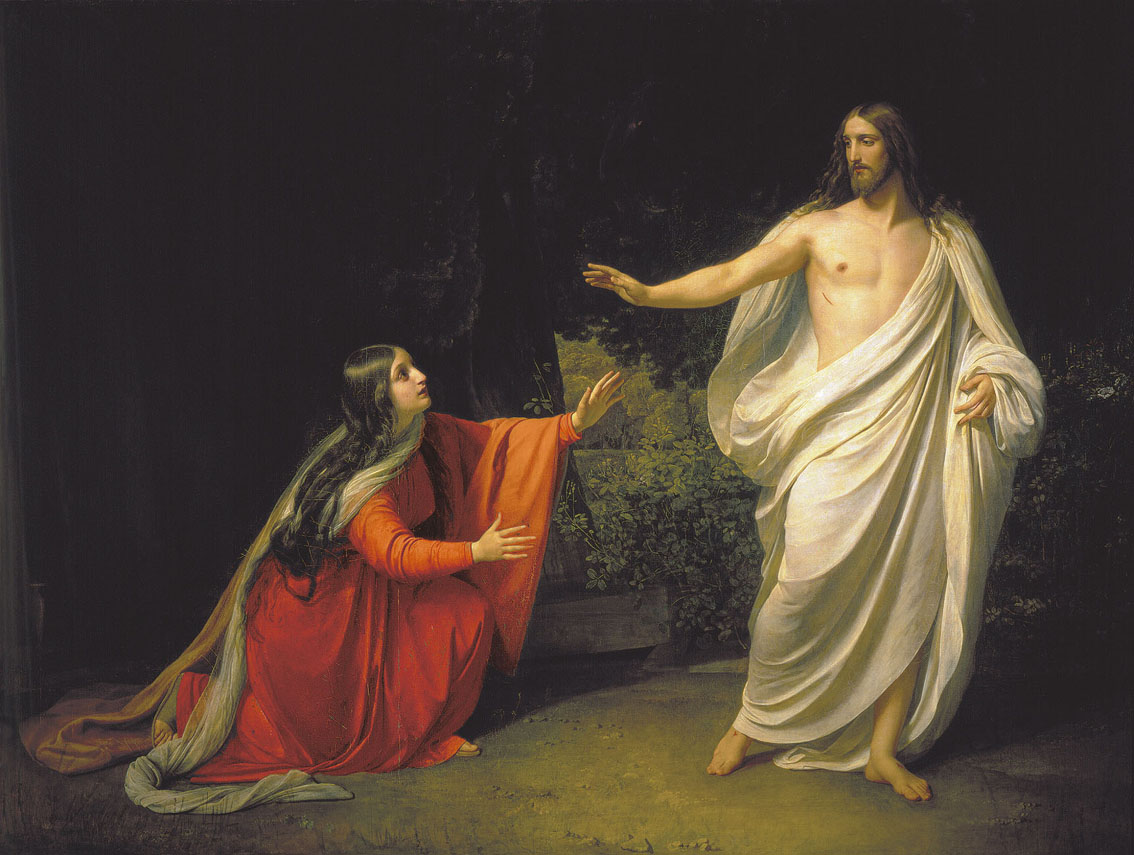
Also see:
The Non-Dual Vision of Jesus Christ and the teachings of Sri Ramana Maharshi
The Sermon on the Mount According to Vedanta (Jesus, Christanity, Advaita and Non-Duality)
In non-dual teachings, the basic teaching is that the sense of self that we presume ourselves to be is a fiction. What remains after this is seen is a mysterious and ordinary sense of ‘divine oneness’. One ramification of this teaching is that we can learn to see that we are not the authors of our own actions even though we appear to be. This is known as non-doership. This teaching is often stated explicitly in non-dual traditions such as Advaita Vedanta, Zen, Dzogchen and Taoism.
In theistic traditions like much of Hinduism and the Abrahamic traditions of Judaism, Christianity and Islam, non-duality is still expressed, but its form often differs. Continue reading
 Tom Das