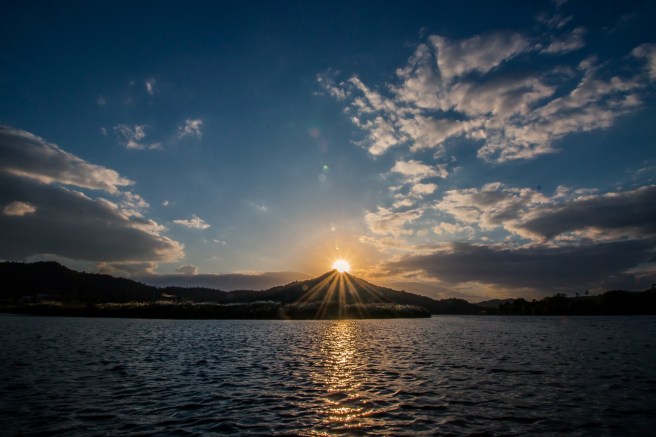
All I know is I don’t know.
I don’t even know what doesn’t know.
Just all this,
Happening by itself:
No knowledge of a knower,
And never understanding any of it.
Mystery is an apt label,
For this unknowing.
All I know is I don’t know.
I don’t even know what doesn’t know.
Just all this,
Happening by itself:
No knowledge of a knower,
And never understanding any of it.
Mystery is an apt label,
For this unknowing.
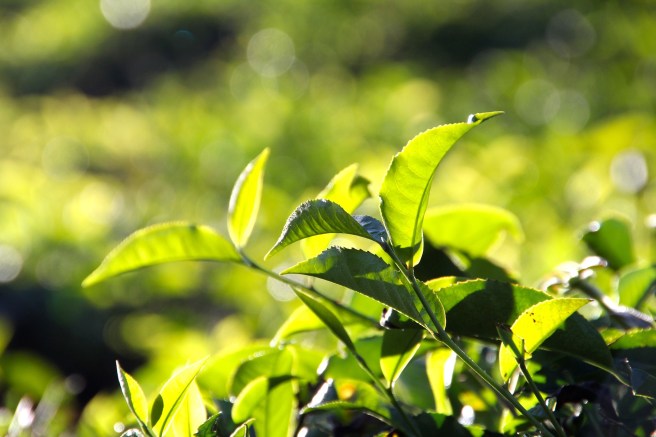
It’s too ordinary for you to notice.
Whenever you’re seeking,
Whatever you’re seeking,
You’re seeking something else,
A mental projection,
A fantasy.
The self that causes all the mischief,
All the suffering,
Is an imagined entity.
It is seeking its own end
– how absurd!
No-self is already here.
To notice this,
There is nothing that you need to notice,
(Nothing you need to do)
As it is always being noticed.
It is simply the totality of whatever is already being perceived,
And in that totality there has never actually ever been a perceiver,
The perceiver being an imagined entity.
Ask yourself “Who am I?”,
“What is the I”,
And you will find no “I” there,
“I” being just an empty thought.
Reality is simply that which remains
When no actual “I” is seen,
When things are seen as they are,
Which is always the case.
There is nothing you need to do,
Nothing to realise,
Only cease adding the notion of “I”,
Only cease to believe in that “I” for which there is no evidence.
Then the notion of “I” can still appear,
The “I” can still come and go as it pleases,
(for this “I” is just a thought,
and like all phenomena,
its appearance cannot be controlled,
spontaneously appearing and disappearing by itself)
But it is no longer believed in.
The “I” being seen through,
Reality shines by itself,
As it has always done.
This is nothing new,
I hesitate to say nothing special,
As it is also truly wonderful.
Reality being everywhere and ever-present
– what is more ordinary and commonplace than that?

Being fearless,
The body becomes wide open,
The heart sensitive and vast:
All thoughts, feelings and sensations are welcome here,
Even fear.
Completely open
We truly feel.
Willing to feel,
We are truly alive.
Not resisting,
We feel whole, connected.
Not knowing what will happen next,
Isn’t this true freedom?

We stumble across the ‘selfless-state’
quite naturally
all the time.
It goes by different names,
dependent on context.
In sport,
It is called ‘the zone’.
In relationship to nature,
It is called Beauty.
Insight is not personal insight.
With personal insight, you have an insight,
You realise this or that,
You realise x, y or z.
All personal insight is based on concepts or thought,
– they are all subject to change,
– they are all subject to doubt.
With Insight it is the person that is seen through;
Insight is there without a person having an insight:
Everything is just Insight,
There is only Insight.
Like realising the lake is a mirage:
Your personal insights and doubts were just ripples on its surface;
Then the whole of spirituality is done for,
No need for any of it anymore,
What else is there to do?
What can be done when there is no doer?

If you think: “I know Brahman well,” then surely you know but little of Its form
Kena Upanishad
One of the astounding things about this is that it is impossible to put this into words. Put what into words you may ask?….this! Just this! Call it Tao, God or call it Brahman – these are really just meaningless words unless we understand what the words are pointing to.
All the great teachings have tried to express the Inexpressible. They have tried to indicate That which gives meaning to life but is beyond meaning, That which is transformative but at the same time nothing changes when It is ‘realised’ (how can that be?), That in which suffering and separation are seen to be imaginary and illusory. When That is understood, all the scriptures can be made sense of, and all of the scriptures are also seen to be ultimately inaccurate.
The Tao Te Ching, that wonderful poem from ancient China, starts with the confession that what it is writing about cannot be written about:
The Tao that can be spoken of is not the eternal Tao
Tao Te Ching, verse 1
What you are seeking is constantly being realised, whether you realise it or not! One of the advantages of the concept of God is that God is not meant to be knowable. However with the concept of self-realisation and the ever increasing preponderance of the all-knowing guru on the spiritual scene, it is often thought that this is something that can be known by the mind. Here’s what our Sufi friend Abol-Hasan has to say about it.
One may speak of those absent,
but one who is Ever Present,
one can say nothing of
Sheikh Abol-Hasan, saying 92
Throughout the ages, people from all walks of life have spontaneously awoken to this ‘understanding’: scholars and illiterates, men and women and children, those with a spiritual tradition and those without one.
All true knowers of truth are always fuzzy when it comes to how to realise this for oneself, for there is no single path and no single practice that has the monopoly here. This is not always a popular message, and certainly not one that is easy to grasp (it’s impossible to grasp) and pass on through the generations.
Here we can see the Kena Upanishad trying to express the futility of organising a spiritual system around this understanding:
The one who has thought it out does not know it.
It is not understood by those who understand it;
it is understood by those who do not understand it.
Kena Upanishad
This is ever present, it is none other than Our-True-Self, which is simply life devoid of the illusion of doership. It is here, yet cannot be known by the mind or senses. It cannot be captured in words.
I do not think I know It well, nor do I think I do not know It.
He among us who knows the meaning of “Neither do I not know, nor do I know”
— knows Brahman.
Kena Upanishad
This realisation is nothing to be gained. When you realise, there is no realisation at all. It all just falls away. What is there to realise? Who is there to realise? There is just this. This is enough. Realisations come and go in this. And this is not a concrete thing that you can grasp or possess, but it is life just happening right now as it is.
Boddhidharma, the Indian monk and founder of Zen (Chan) Buddhism tells us just this, and he says it repeatedly – here is just one example:
“To say he attains anything at all is to slander a Buddha. What could he possibly attain?”
Boddhidharma from the Bloodstream Sermon
Ramana Maharshi was someone who had a spontaneous realisation of all of this as a teenage boy. He had no guru and knew little of any spiritual teaching. Over the years he learnt the language of Advaita Vedanta and found that its teachings described that which he was already experiencing. Here’s what he has to say about self-knowledge (Atma-Jnana in Sanskrit):
Q: When a man realises the Self, what will he see?
M: There is no seeing. Seeing is only being. The state of Self-realisation, as we call it, is not attaining something new or reaching some goal which is far away, but simply being that which you always are and which you always have been.
All that is needed is that you give up your realization of the not-true as true…At one stage you will laugh at yourself for trying to discover the Self which is so self-evident.
Ramana Maharshi
And he repeats this again and again (italics added by me):
If we talk of knowing the Self, there must be two selves, one a knowing self, another the self which is known, and the process of knowing.
The state we call realisation is simply being oneself, not knowing anything or becoming anything. If one has realised, one is that which alone is and which alone has always been. One cannot describe that state. One can only be that.
Ramana Maharshi
So if this is unknowable, how to reach this ‘understanding’ at all? Let us listen to the Maharshi:
Q: But how is one to reach this state?
M: There is no goal to be reached. There is nothing to be attained. You are the Self. You exist always. Nothing more can be predicated of the Self than that it exists. Seeing God or the Self is only being the Self or yourself. Seeing is being.
You, being the Self, want to know how to attain the Self. It is something like a man being at Ramanasramam asking how many ways there are to reach Ramanasramam and which is the best way for him.
Ramana Maharshi

Everything appears fresh,
Fresh, crisp and clear;
A sparkling mirror,
everything perfectly reflected.
Body, mind and senses function by themselves,
As they have always done,
Light! Sensations! Movement!

This is a question that often comes up, and many teachers often state that reality is impersonal. I myself have written a piece stating just this (complete with an impersonal looking image). However, like so many things we can write and say about reality, it is often correct in one way but false in another. As I’ve stated many times before, reality cannot be captured in words.
We could say that reality is impersonal or both personal and impersonal, or we could say that it is neither personal or impersonal. All these statements would be correct in the correct context.
But are these statements helpful? To say that reality is either personal or impersonal is ultimately besides the point. The essential point is to see things as they are, or rather to stop believing in all our concepts about reality – then reality shines, as it always has done. Who cares if it’s personal or impersonal?
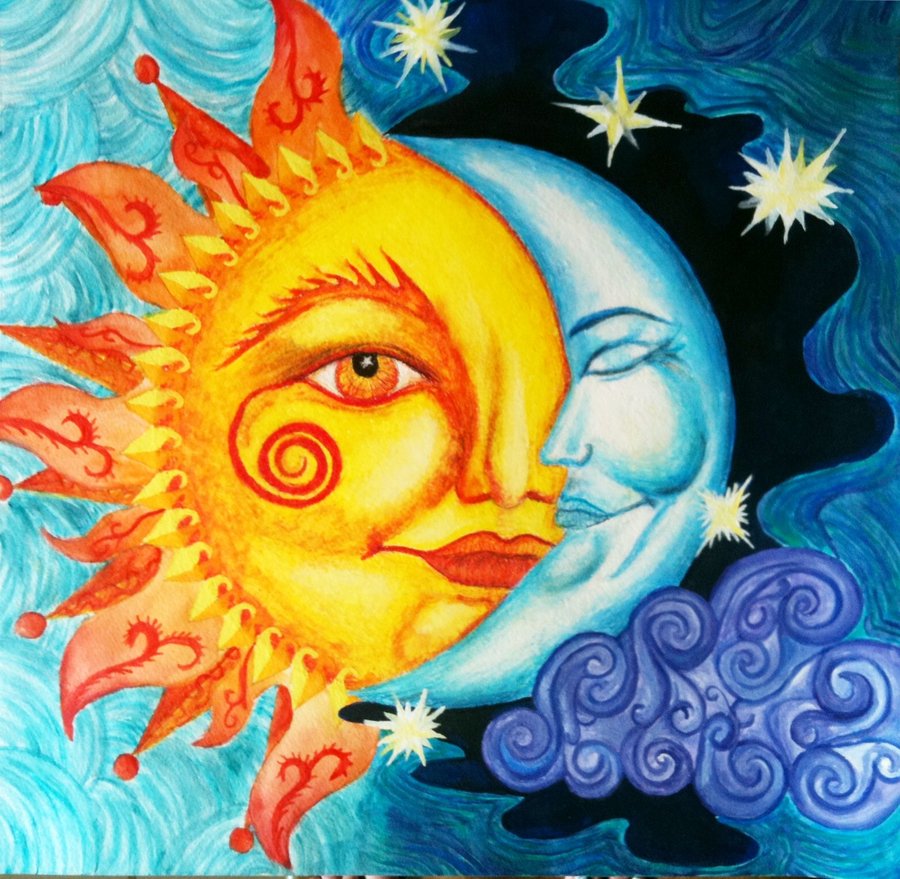
The sun
Bright, bold, clear, unchanging,
The masculine principle.
The moon,
Mysterious, shape-shifting, temperamental,
The feminine principle. Continue reading

 Tom Das